

Powder Metallurgy
Metal parts processes include die casting, lost wax casting, forging, machining, metal stamping and other processes. Powder metallurgy is also a type of metal parts process. Powder metallurgy is a process that puts metal powder into molds, compacts it, and achieves mass production of high-precision parts through high-temperature sintering. Powder metallurgy also has many advantages such as high material utilization, low cost, short production cycle, and the ability to achieve mass production. With the continuous development of material science and process technology, powder metallurgy technology is also constantly innovating and improving, providing strong technical support for the development of all walks of life.

The transmission fork is an important component in the automobile transmission, used to control gear selection and the operation of the transmission mechanism. Powder metallurgy technology offers a number of advantages when manufacturing gearbox forks.
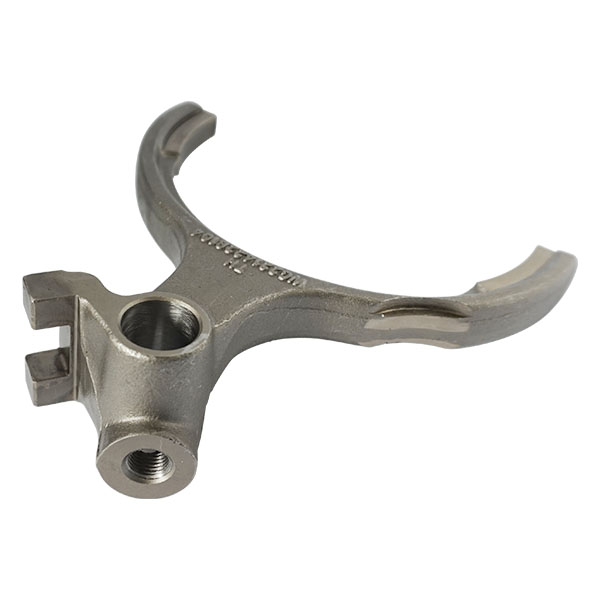
The shift fork manufactured through powder metallurgy technology has a high degree of precision and uniformity, ensuring its stability and reliability during the shifting process.

The differential gasket is an important accessory in the differential. It is used to adjust the gap and friction coefficient between the gears to ensure the normal operation and performance of the differential.

Differential gaskets manufactured using powder metallurgy technology have good compactness and uniformity and can provide stable gap adjustment and friction effects.
Powder Metallurgy Bearings For Automotive

Powder metallurgy bearings are widely used in automobiles and their main advantages include high wear resistance, fatigue resistance and high temperature resistance. These bearings are usually manufactured using powder metallurgy technology, which uses metal powder compacted in a mold and sintered at high temperatures. In automobiles, powder metallurgy bearings are often used in key parts such as engines, gearboxes, suspension systems and transmission systems. Their excellent wear and fatigue resistance allow them to withstand high-speed rotation and frequent movements while maintaining stability in high-temperature environments. Therefore, powder metallurgy bearings can provide reliable support and long-lasting performance during vehicle driving, ensuring smooth operation and long-term reliability of the vehicle.
high quality
Advanced Equipment
Professional Team
One-Stop Solution
Starter Bushing:
The starter bushing is located on the rotating bearing of the starter motor to reduce friction and wear. Bushings made of powder metallurgy usually have good wear resistance and fatigue resistance, and can maintain stability while rotating at high speeds, extending the service life of the starter motor.


Clutch copper sleeve:
The clutch copper sleeve is located between the clutch friction plate and the clutch pressure plate. It is used to reduce friction and wear and ensure the normal operation of the clutch. The clutch copper sleeve made of powder metallurgy has good wear resistance and thermal conductivity, and can withstand high temperature and high pressure working environment, extending the service life of the clutch and improving driving comfort.
Transmission shift fork:
The transmission shift fork is a part used to switch transmission gears. It needs to have high wear resistance and fatigue resistance. Powder metallurgy technology can produce shift forks with uniform density and strong structure, which can withstand long-term high-frequency use without being easy to wear, thereby ensuring smooth shifting and long-term reliability of the gearbox.


Differential Spacer:
The differential spacer is located inside the car's differential and is used to balance the difference in speed of the drive wheels and ensure the stability of the vehicle when cornering. Differential gaskets made of powder metallurgy have good wear resistance and corrosion resistance, and can withstand high pressure and frequent movements, thereby ensuring the normal operation of the differential and driving safety.