


Self-lubricating bushings, also known as oil-free bearings, oil-free bushings, oil-free guide sleeves, copper bushings, and graphite copper bushings, are bearings designed to operate stably and for extended periods without the need for external lubrication (oil or grease). Their structure and materials typically contain solid lubricants (such as graphite and PTFE), which automatically release lubricating agents during movement, achieving lubrication without the need for oil.
These bushings are often used in environments where maintenance is difficult, frequent lubrication is inadequate, or cleanliness is critical, such as automated equipment, automotive parts, medical equipment, food packaging equipment, and new energy production lines.
Material Properties
● Allows maintenance-free and long-life operation;
● Suitable for high static and dynamic loads;
● With low and smoothly coefficient of friction and without stick-slip effects;
● Suitable for dirty, corrosion, impact load and edge loading;
● The base material provided a good shock-absorbing capacity;
● Can be used over a large temperature range;
● Suitable for reciprocating, rotating and oscillating movement with start frequency and difficulty to form oil film occasions;
● With low wear rate and long life service.

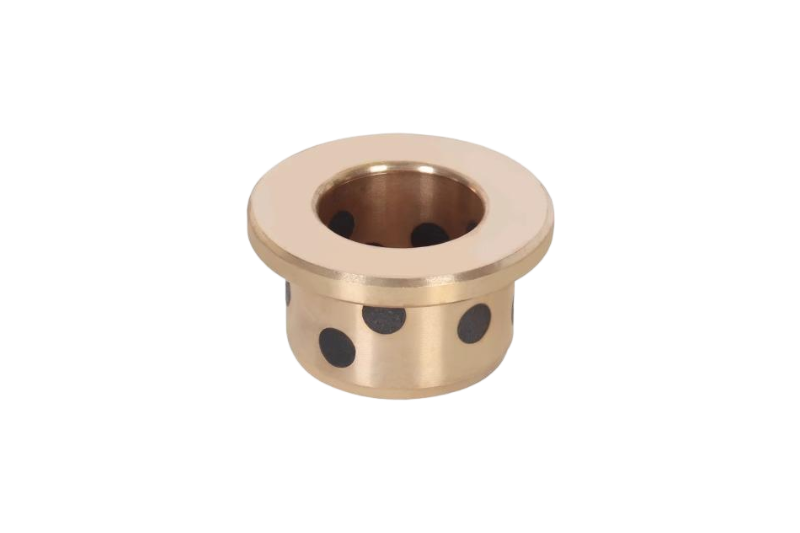
Structure Characteristics
● Combines wear resistance and self-lubricating properties of solid copper alloy material;
● Operates smoothly without refueling or frequent maintenance;
● Designed for high load, intermittent, or oscillating motion conditions;
● Available in various copper alloy compositions to meet different application needs;
● Widely used in automotive production lines, water wheel machinery, reservoir/floodgate doors, plastic machinery, and punching peripherals.
Application Fields of Bronze Bushings
Injection molding machine mold, auto mold, engineering machinery, hydraulic cylinders, large gear boxes, metallurgy continuous casting machine, train bracket, steel rolling equipment, mining machinery, shipbuilding, gas turbines, crane support, food machinery, turbine bearings...etc


Working principle of self-lubricating bushing
Traditional bearings rely on lubricants to form an oil film during operation, minimizing direct metal-to-metal contact. Self-lubricating bushings, on the other hand, have lubricants embedded into the metal matrix during manufacturing.
● Graphite-embedded copper bushings: Graphite blocks are filled into pre-formed holes. During shaft rotation, the graphite gradually releases lubricating components as it rubs against the shaft.
●Porous sintered metal bushings: Lubricants are pre-impregnated into the pores, continuously releasing lubricant during operation through capillary action and thermal expansion and contraction.
Common Materials And Types Of Self-lubricating Bushings
| Type | Material | Features |
|---|---|---|
| Graphite copper sleeve | High - strength brass embedded with graphite | High load, low speed, high temperature resistance. |
| Composite bushing | Steel back + PTFE coating | Low friction, suitable for medium - load and high - speed environments. |
| Oil - impregnated bushing | Porous bronze, iron - based powder metallurgy | Utilizes the oil contained in the body itself. |

Oil-Free Bronze Bushing Performance Data Sheet
| Material |
CuZn25Al6Mn4Fe3
|
CuSn5Pb5Zn5
|
CuZn25Al5Mn4Fe3
|
ZCuAl9Fe4Ni4Mn2
|
| products |
 |
 |
 |
 |
| Density g/cm³ | 8 | 8.7 | - | 8 |
| HB Hardness | >210 | >70 | 80–100 | >210 |
| Tensile Strength N/mm² | >750 | >200 | - | >750 |
| Yield Strength N/mm² | >90 | - | >450 | - |
| Elongation % | >15 | - | >12 | - |
| Coefficient of Linear Expansion ×10⁻⁶/°C | 1.8 | 1.2 | 1.2 | 1 |
| Heat-Conducting Coefficient W/m·K | 48-63 | - | - | - |
| Flexibility Coefficient kN/mm² | 85–115 | - | - | - |
| Temp. Limits °C | -40~+250 | - | - | - |
| Max. Dynamic Load N/mm² | 60 | - | - | 0.8 |
Related Products

Brass Bush
Wear-resistant and with excellent thermal conductivity, suitable for light-to-medium-load mechanical applications.

Flanged Bronze Bushings
A flanged bushing is a bearing bushing with a flange edge, usually made of metal
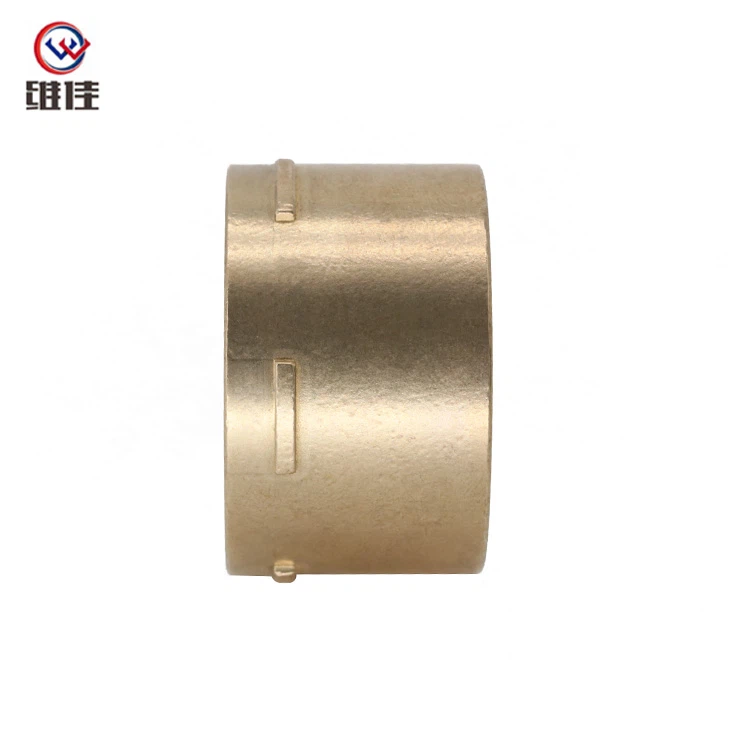
Phosphor Bronze Bushes
Designed specifically for fans and rotating equipment, ensuring low friction and smooth operation.


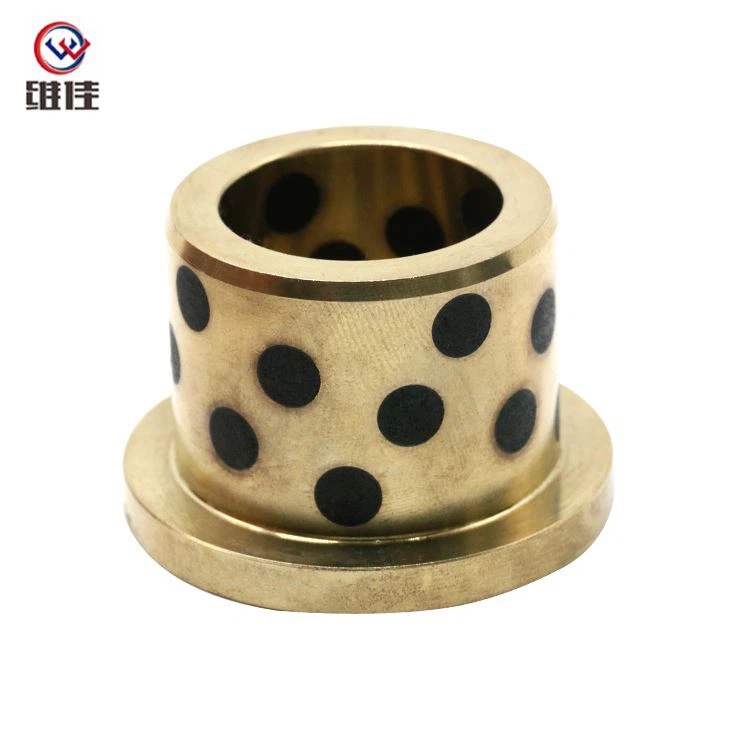
Graphite Bronze Bushing
High-temperature resistant and low-friction, suitable for high-temperature operating conditions.
Custom Self Lubricating Bushings Manufacturer
Choosing the right copper alloy oil-free bushing requires comprehensive consideration of the equipment's load, speed, temperature, and operating environment. If you require information on copper alloy oil-free bearing pricing, technical specifications, or compatible models, please contact us.
Welfin Technology Co., Ltd., a long-term supplier of bronze bushings, offers a wide range of oil-free bushings, graphite copper bushings, and self-lubricating bearings. We support custom processing and wholesale procurement, catering to a variety of industries, including automation, mold manufacturing, and construction machinery.
Professional team
We have an experienced and professional team to ensure quality.
Global recognition
Our main partners are based in Europe and America, which reflects the international recognition of our product quality.

Honor and qualification

Quality management system certification

environmental management system

OHS Management System Certification

Zhejiang Manufacturing
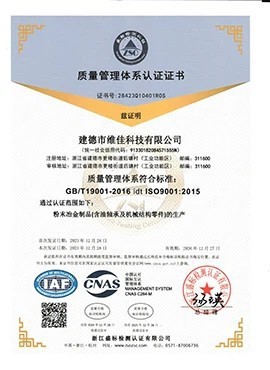
Quality Management System Certification
FAQ
1.What is a self-lubricating bronze bushing?
Self-lubricating bronze bushings are made by embedding solid lubricants (such as graphite, PTFE, etc.) on the bronze base or using oil immersion method, so that it automatically releases lubricating substances during operation, thus eliminating the need for additional oiling.
2.What is the difference between self-lubricating bushings and ordinary bronze bushings?
Ordinary bronze bushings require external grease/lubricant; self-lubricating types contain or have built-in lubricant, which can reduce or eliminate maintenance to a certain extent.
3.Are oil-free bronze bushings the same as self-lubricating bronze bushings?
They can be considered synonyms. Oil-free emphasizes "no oil required," while self-lubricating emphasizes "self-lubricating"-they describe essentially the same product.
4.What types of self-lubricating bronze bushings are there?
Common types include:
Oil-impregnated (sintered bronze) type
The graphite-plugged / inlaid solid lubricant types differ in manufacturing process and applicable scenarios.
5.How do oil-impregnated self-lubricating bushings work?
A porous bronze structure is created using a powder metallurgy process, and lubricating oil is injected into it. During operation, the lubricating oil is released to the surface through capillary action or temperature/pressure effects.
6.How do graphite insert self-lubricating bushings work?
Grooves or holes are pre-milled into the copper bushing base, and solid lubricants (such as graphite strips or graphite particles) are inserted. During operation, the lubricant gradually forms a thin film on the friction surface.
7.What applications are self-lubricating bushings suitable for?
They are particularly suitable for applications with difficult maintenance or limited lubrication conditions, such as high temperature, high load, vibration, frequent start and stop, confined space, etc.
8.What are the advantages of self-lubricating bushings?
Reduce maintenance frequency
Reduce the risk of manual refueling
Lubricates even in extreme environments
Eliminate the risk of grease contamination
Extended life and stability
9.What are the limitations or risks of self-lubricating bushings?
At very high speeds or loads, its lubrication capacity may be insufficient
Solid lubricants or oils may be exhausted and fail
Improper installation or material selection can lead to premature wear or jamming
Not necessarily suitable for all working conditions, the type needs to be selected according to specific conditions
10.How should you choose the material for a self-lubricating bushing?
Consider factors like load, speed, temperature, and the environment (humidity, dust, corrosion). Common alloys include aluminum-copper, tin-copper, manganese-copper, and cast copper alloys. The ratio can be optimized based on the operating conditions.
11.Are self-lubricating bushings completely maintenance-free?
While designed to reduce maintenance, relubrication or bushing replacement may still be necessary under extreme operating conditions. It reduces, but does not eliminate, maintenance.
12.Can self-lubricating bushings operate reliably in high-temperature environments?
Different types have different temperature resistance capabilities. Solid lubricants (such as graphite) are more resistant to high temperatures; oil-immersed types may fail at extremely high temperatures. This requires evaluation based on the specific temperature.
13.How much load can a self-lubricating bushing withstand?
While its load capacity is significantly higher than that of a typical plastic bushing, it may have limitations under extremely high loads compared to pure metal bushings (without lubricant inserts). Please refer to the specific alloy and product parameters for details.
14.How to install and match self-lubricating bushings?
The fit accuracy between the bushing and the shaft must be ensured (appropriate clearance)
Avoid damaging the lubricant insertion point during installation
For pre-lubricated or oil-immersed types, attention should be paid to directionality and hole alignment.
Follow the manufacturer's installation instructions to avoid compromising performance
15.How to determine whether the self-lubricating bushing has failed?
Increased friction noise
Abnormally high temperature
Surface wear scars intensify
Lubricant (e.g. graphite) insertion points are worn flat or peeling off
Unstable operation, freezing, and other abnormal phenomena
Hot Tags: self lubricating bushings, China, suppliers, manufacturers, factory, wholesale, customized