

Customized Bearing Bushing Manufacturer In China
Custom Bearing Bushing Supplier | OEM & ODM available

Bearing Bushing Supplier


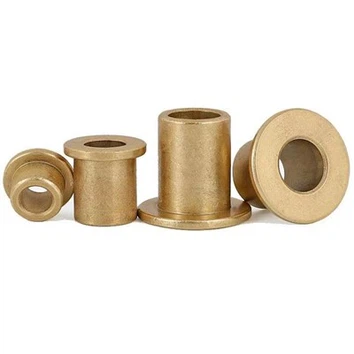


Types of Bearing Bushing

Bronze Bushings
The bronze bushing embodies the perfect balance of strength, reliability, and efficiency.
Versatility
Durability
Low-maintenance

Sintered Brass Bushings
This toughness extends the life of the product due to the inherent properties of brass.
Corrosion resistance
High temperature
Heavy load resistance

Fan Bushing
Electric Fan Bushing to Bearing exhibits excellent corrosion resistance, making it suitable for use in harsh environmental conditions.
Moisture resistant
Humidity resistant
Chemical resistant

Flanged Bushing
Our expertise in powder metallurgy ensures that each sleeve we produce meets the highest standards of performance and reliability.
High quality
Wear-resistant
Corrosion-resistant

Bronze Bearing Bushing
High-quality bronze bearing bushings are usually made of cast bronze material, which has excellent wear resistance and low friction coefficient.
Smooth
Steady
High load

Graphite Bearing Bushing
Carbon graphite bearings & bushings are high-performance components. They possess excellent self-lubricating properties, reducing friction and wear.
Good chemical stability
High temperature resistance
Corrosion resistance
Why Choose Jiande Welfine Bearing Bushing?
We are looking for a cooperative partner to expand our business.
Lower MOQ
Our MOQ is 100pcs per model, lower than others suppliers.
Competitive Price
Buy from us, you will get factory direct selling prices.
30000KMS/Year Warranty
One Year Warranty and long lifetime service for customers.
OEM/ODM Service
Laser printing logo and customized package
Fast Delivery Time
The production time is 30 days. If you have urgent orders, we can handle special.
Sample Available
After you confirm the order, we can send free sample to you for checking quality.

High Precise
Advanced Equipments
High Precision CNC
OEM Quality Standard

100% Tested
Income Materials Test
Multiple Testing in Production
Bulk Test Before Delivery
What are the Applications of Bearing Bushing?

Automotive Components
Bushings are used in areas such as engines, gearboxes, and suspension systems to reduce direct metal-to-metal contact, thereby decreasing noise and vibration.

Industrial Machinery
In machine tools, conveyor equipment, and pump systems, bushings are used to support rotating components and ensure smooth operation.

Aerospace Industry
It is also widely used in the aerospace industry due to its ability to operate stably at high speeds and variable loads.

Agricultural
In agricultural equipment such as tractors and harvesters, bushings reduce wear on mechanical components, thereby improving operational efficiency.
Bespoke Sintered Bronze Bearing Bushing Manufacturer
Jiande Welfine’s bearing bushings are manufactured in bronze to our clients’ designs with the highest level of precision to ensure we meet exacting tolerances and specifications. The objective is to achieve the smallest coefficient of friction possible according to the working conditions, such as load, velocity, type of movement, environment, temperature and so on…
Our bespoke bushings are manufactured to offer a longs service life operating in the following conditions:

High Loads

Low Speeds

High Temperatures

Humidity

HIGH QUALITY SERVICES

UNLIMITED SUPPORT
How Bearing Bushing Work ?

You can find bushings in different sizes. Some of them are long, whereas others are short. You can also find them in different materials. Stainless steel, carbon steel and aluminum alloy are common materials in which bushings are made. Regardless, all bushings work in a similar way.As shown in the photo above, bushings feature a simple design. They consist of hollow tubes. The ends of a bushing are designed to accommodate rotating parts. A rotating part can be inserted into the end of a bushing. The bushing will then isolate the part while allowing it to rotate.
Self-Lubricating Bearing Bushing Materials

Self-lubricating bearings are seeing broader adoption in scenarios where maintenance poses challenges or operating conditions are harsh. Typical applications cover industrial machinery such as conveyor systems, production lines, and heavy-duty equipment, where operational downtime leads to substantial costs.
- Polytetrafluorethylene (PTFE) – A polymer with strong chemical resistance and electrical insulation capabilities, capable of withstanding elevated temperatures while offering the lowest friction coefficient among solid materials.
- Polyetheretherketone (PEEK) – A rigid thermoplastic material renowned for its excellent mechanical and chemical resistance properties, maintaining stable performance even under high-temperature conditions.
- Fillers – Incorporating filler materials can enhance specific characteristics like creep resistance or electrical conductivity, all while preserving PTFE’s superior low-friction attributes.
Process Of Bearing Bushing
Design
The process starts with designing the bearing bushing according to the requirements of the specific application. The design process involves defining the dimensions, selecting the material, and creating a blueprint of the bearing bushing.
Material Selection
Based on the application, different materials can be selected. These materials include bronze, brass, copper, steel, or plastic. For self-lubricating bearing bushing, materials such as bronze or steel are often impregnated with lubricants like graphite or PTFE.
Cutting and Shaping
The selected material is cut and shaped into the designed form. This can be done through various methods such as casting (for metals), injection molding (for plastics), or machining (for both metals and plastics).
Finishing
The cut and shaped bearing bushing are then finished. This involves smoothing the surfaces, removing any burrs, and often applying a surface treatment such as plating, painting, or coating to increase corrosion resistance and improve wear properties.
Quality Control
Finally, the finished bearing bushing are inspected and tested to ensure they meet the specified quality standards. This often involves measuring the dimensions, checking the surface finish, and testing the material properties.
Our Factory
Jiande Welfine Technology Co., LTD is a company with a high standard factory building of 14,000 square meters, in the beautiful scenic spot on the Xin 'an River by the bank of Qiandao Lake, focusing on powder metallurgy products for 21 years. We are a professional and experienced team dedicated to providing quality products such as bearings and automotive parts to customers around the world.Our main partners are from Europe and America, which proves that the quality of our products is recognized by the international market. We have our own independent laboratory, which can carry out strict quality testing on each batch of products to ensure that each product meets the requirements of customers.We believe that trust is built on quality and service, so we focus on product quality and customer service. Our products can be used with confidence and are a powerful assistant to your business success.We have a positive attitude, constantly innovate, improve process technology and quality standards, not only to satisfy customers, but also to make our employees proud and recognized. We will continue to build the highest quality products and services, become industry leaders, and create a better future.


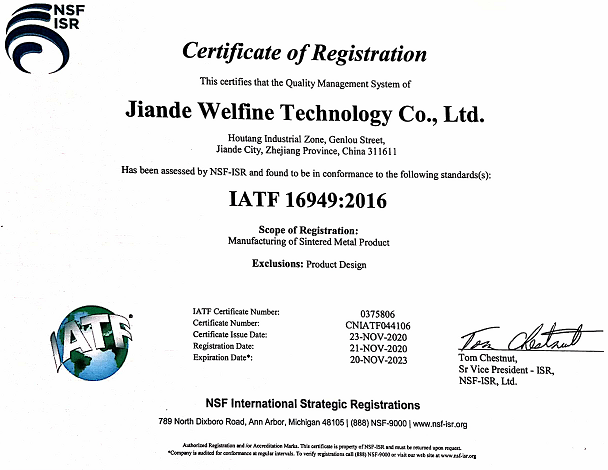
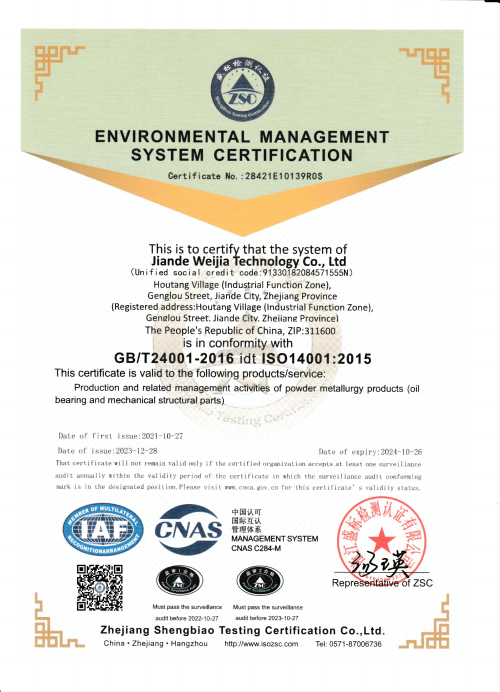
Certificate



FAQ
Q: What is a bearing bushing?
Q: What is the purpose of a bushing?
Q: What is the difference between a thrust bearing and a bushing?
Q: What is the difference between a bush and a bushing?
Q: What happens when a bushing goes bad?
Q: What's the difference between a bearing and a bushing?
Q: What causes bushing failure?
Q: Is a thrust bearing a throw out bearing?
Q: What happens when thrust bearing goes?
Q: Which is the most preferred use of bush bearing?
Q: Can you just replace bushings?
Q: Are bushings expensive to replace?
Q: Why do bushings need to be replaced?
Q: What are the signs of bad bushings?
Q: What happens if you drive with worn bushings?
Q: What do worn out bushings sound like?
Q: How long does it take to replace bushings?
Q: What are the symptoms of a bad strut rod bushing?
Q: Do bad bushings make noise?
Q: What happens if thrust bearing fails?
Find professional bearing bushing manufacturers and suppliers in China here. We're offering high quality customized bearing bushing with competitive price. Please rest assured to wholesale bulk products from our factory.