

Powder Metallurgy Parts Manufacturers In China
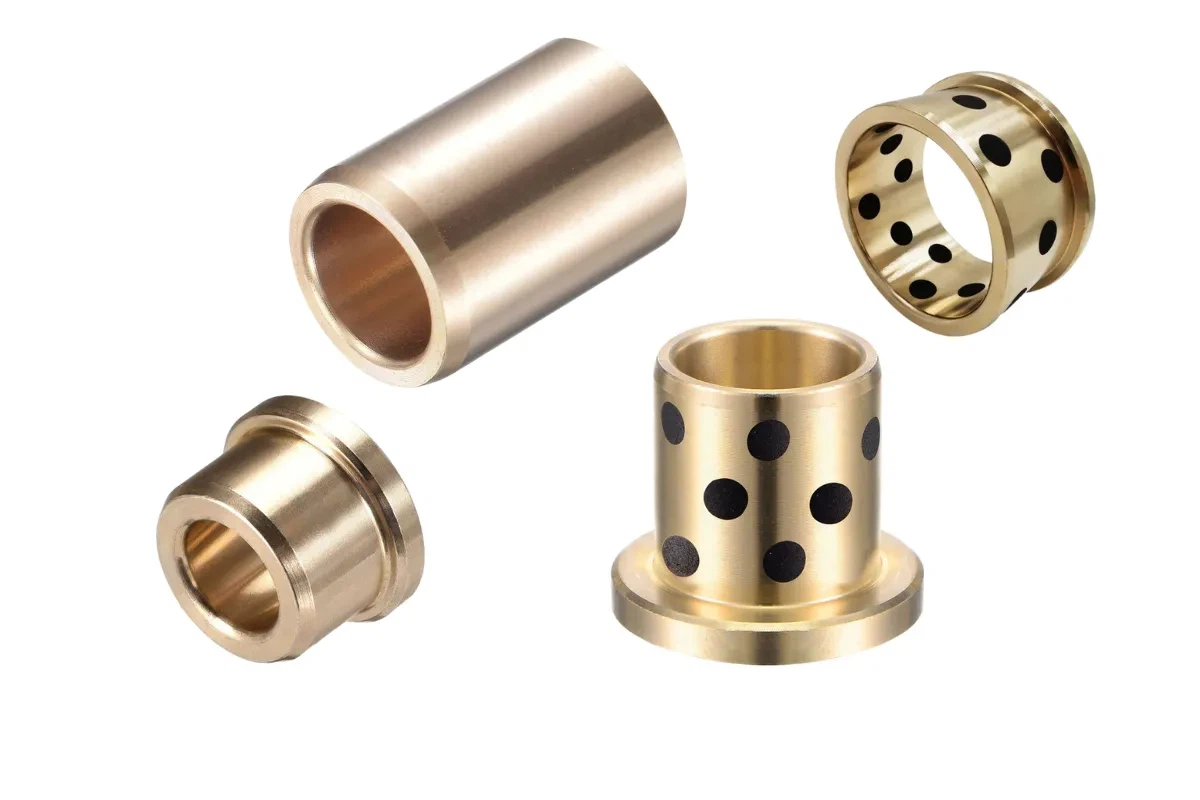
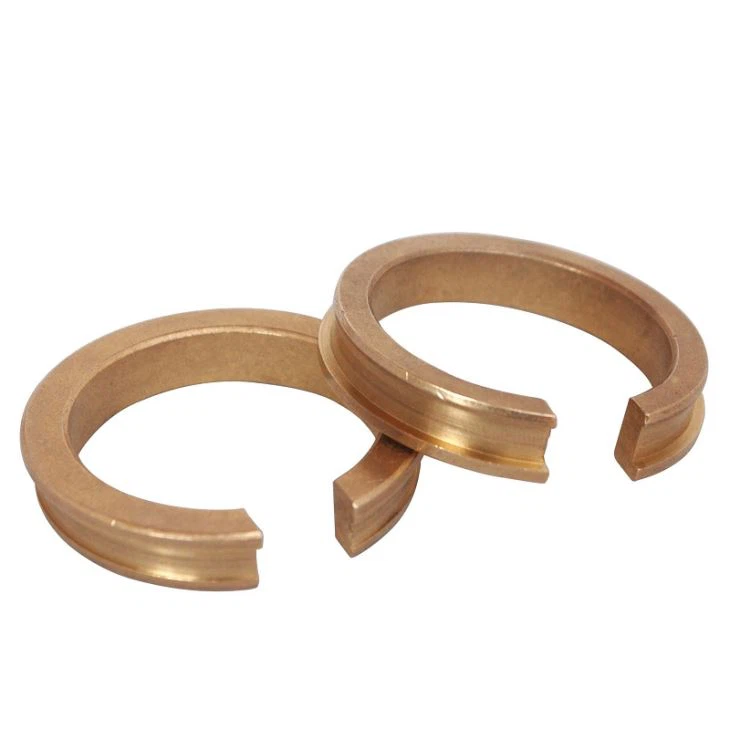
Powder metallurgy parts are metal components manufactured through powder metallurgy technology, which involves mixing metal powders with other powders, compressing them into shape, and bonding them into a solid metal structure through the sintering process. These parts are capable of forming complex shapes, offer high material utilization, are suitable for mass production, and exhibit uniform microstructures and good mechanical properties. Powder metallurgy parts are widely used in various fields such as automotive, aerospace, electronics, medical devices, and more. Common parts include gears, bearings, cams, Bushings, etc. They typically have high precision and low surface roughness and may require subsequent steps such as heat treatment, surface treatment, or machining to meet the final performance requirements.
Powder Metallurgy Parts Supplier


Benefits of Powder Metallurgy Parts
Scalability for High Volume
Powder metallurgy is an easily replicable process, which means that you can manufacture parts at a high volume. In fact, the most cost-effective use of this method is to produce more than 10,000 of each part per year!
Superior Finish
The powder metallurgy process produces an excellent surface finish on your final parts, and they can also have secondary finishes applied after sintering to add more resistance to wear or corrosion or to improve the part’s strength.
Cost-Effectiveness
One of the most important powder metallurgy benefits that companies will notice is that the process is quite cost-effective. This is due to a number of factors, including the following.
Less Machining
Because parts are fabricated as close as possible to the final expected dimensions, there is very little machining that needs to be done in order to clean up the piece, saving both time and money.
Less Scrap
In other metal manufacturing processes, there’s usually a great deal of wasted product, and while much of that is reclaimed and recycled, each step in the recycling process costs money.With powder metallurgy, most parts incorporate over 97% of the raw material, virtually eliminating waste. This is because powder metallurgy makes use of additive manufacturing principles, rather than subtractive manufacturing.
What are the Applications of Powder Metallurgy Parts

Aerospace applications
Aero-engine and land-based gas turbine applications for Powder Metallurgy products require extremely good properties and the PM-based process routes in this sector generally incorporate Hot Isostatic Pressing (HIP).For nickel-based superalloy turbine discs, processing from powders has become necessary to allow the next increments in product performance, through enhanced microstructural control and compositional capability compared with ingot-route material. The Powder Metallurgy process generally involves isothermal forging of a HIP billet, although “as-HIP” parts can also be used where creep strength is the sole design criterion.

Oil and gas industry
In the Oil and Gas sector, hard metal and diamond cutting tools are regularly used for oil and gas exploration. HIP powder products in a range of austenitic and duplex stainless steels are also being increasingly used in off-shore applications, including manifolds and valves. HIP- and laser-cladding techniques are being used to deposit abrasion resistant coatings on a range of off-shore components.Hardmetal and diamond cutting tools are also used for machining operations is many industrial sectors including automotive, aerospace and general engineering.
Healthcare sector
MRI scanners used large quantities of rare earth permanent magnets, processed from powders.Many surgical instruments and dental implants are produced by Metal Injection Moulding.There are growing interests in producing customised medical implants using additive manufacturing and in producing porous implant structures (to match bone stiffness and to aid osteo-integration) by PM processing (MIM, Press/Sinter PM etc.) of materials containing space-holder additions that are removed after forming.
Powder Metallurgy Parts Features
module title
Lorem ipsum dolor sit amet consectetur
Flexibility
Unlike other processes, powder metallurgy parts can blend and mix different metals and nonmetals into a product. Unusual and unique combinations can make up a single part with the use of a binding material. Complicated metallurgical procedures can be avoided as powder metallurgy parts can easily combine different materials and compact them into a single shape.
Near Net Shape
Parts and products produced using powder metallurgy parts do not require any secondary processing. Each part is near net shape, meaning they will not require any finishing. Additionally, powder metallurgy parts have exceptionally high dimensional accuracy.
Raw Materials
The availability of raw materials is a constant problem for production operations since a lack of resources can slow or halt production. Raw materials for powder metallurgy parts are easily accessible and inexpensive. Powdered metals are very common and ordinary materials that are readily available from several producers.
Wear Resistance
It is important that parts installed in cars, planes, and machinery have a long life span to avoid costly repairs and replacement. Parts produced using powder metallurgy parts have exceptional wear resistance and friction coefficient. These factors guarantee that when a powder metallurgy part is installed, it will last.
Magnetism
A unique feature of powder metallurgy parts is its ability to combine different metals to fabricate and produce magnetic components as well as control the magnetic properties. The compaction of powder material is the same process that is used to produce magnets, which makes it an easy property to add to powder metallurgy parts.
Chemical Homogeneity
When a substance is homogeneous, its composition is the same regardless of where in the substance you pull the sample from. This quality is an indication that the properties of a part are consistent throughout its structure. Chemical homogeneity is essential for a component to have uniformity, strength, and durability.
Powder Metal Parts Processes
Injection Molding
The unique benefit of injection molding is its ability to produce complex shapes in large quantities. The powders for injection molding are specially formulated with a binder, such as wax or a thermoplastic. The mixture, referred to as feedstock, is fed into the mold cavity of a normal injection molding machine. When the green compact is discharged from the mold, the binder is extracted by thermal processing or solvent. Any remaining binder dissipates during sintering.
Isostatic Pressing
Isostatic pressing is an equal pressure process wherein the same amount of pressure is applied to the entire surface of the workpiece. By applying pressure equally from all directions, every angle, curve, line, and depth of the part has the same density and microstructure. Isostatic pressing can be performed either cold or hot depending on the requirements of the piece being produced.
Metal Additive
Metal additive manufacturing is a huge step forward in production processes and the next method for producing items we need. Sometimes referred to as three dimensional printing, it is a process that has been used for years to make prototypes for proposed components. Additive manufacturing builds parts layer by layer from a digital representation.
Our Factory
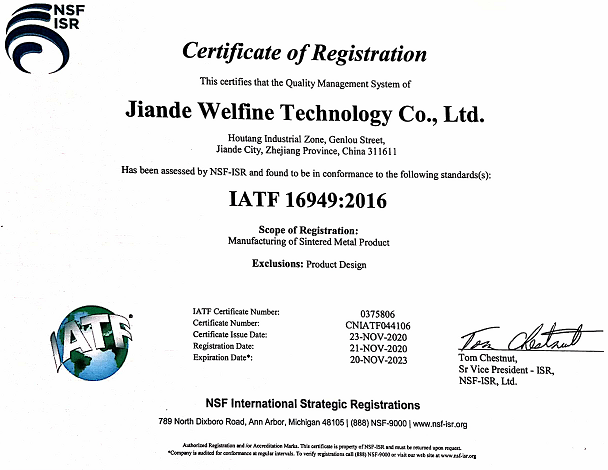
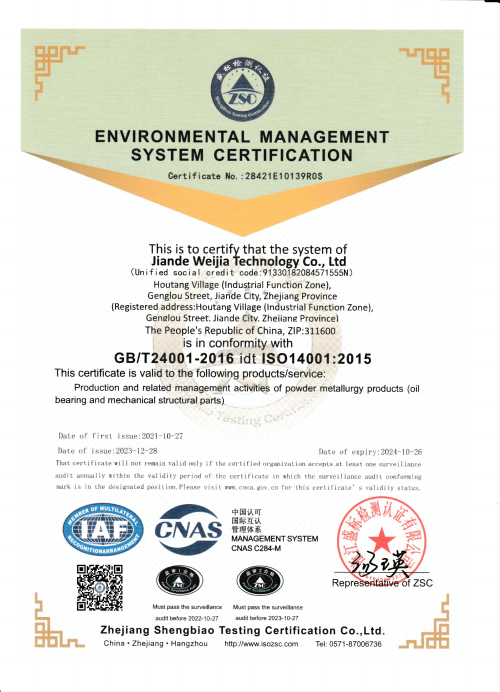
Jiande Welfine Technology Co., LTD is a company with a high standard factory building of 14,000 square meters, in the beautiful scenic spot on the Xin 'an River by the bank of Qiandao Lake, focusing on powder metallurgy products for 21 years. We are a professional and experienced team dedicated to providing quality products such as bearings and automotive parts to customers around the world.Our main partners are from Europe and America, which proves that the quality of our products is recognized by the international market. We have our own independent laboratory, which can carry out strict quality testing on each batch of products to ensure that each product meets the requirements of customers.We believe that trust is built on quality and service, so we focus on product quality and customer service. Our products can be used with confidence and are a powerful assistant to your business success.We have a positive attitude, constantly innovate, improve process technology and quality standards, not only to satisfy customers, but also to make our employees proud and recognized. We will continue to build the highest quality products and services, become industry leaders, and create a better future.


Certificate



FAQ
Q: What are the components of powder metal?
Q: What materials are used in powder metallurgy?
Q: What does powder metallurgy involve?
Q: What equipment is needed for the process of powder metallurgy?
Q: How are metal powders prepared?
Q: What is green compact in powder metallurgy?
Q: What is impregnation in powder metallurgy?
Q: Does powder metallurgy require machining?
Q: What are the four application of powder metallurgy?
Q: Which quality problem can occur with powder metal parts?
Q: Why are metal powders flammable?
Q: How old is powder metallurgy?
Q: Can powdered metal be forged?
Q: How strong is powder metallurgy?
Q: Is powder metallurgy stronger than casting?
Q: Why is powder metallurgy preferred?
Find professional powder metallurgy parts manufacturers and suppliers in China here. We're offering high quality customized powder metallurgy parts with competitive price. Please rest assured to wholesale bulk products from our factory.
motor pinion gear, 32 pitch pinion gear, 64 pitch spur gear