


Jiande Welfine Technology Co., LTD is a company with a high standard factory building of 14,000 square meters, in the beautiful scenic spot on the Xin 'an River by the bank of Qiandao Lake, focusing on powder metallurgy products for 21 years. We are a professional and experienced team dedicated to providing quality products such as bearings and automotive parts to customers around the world.Our main partners are from Europe and America, which proves that the quality of our products is recognized by the international market. We have our own independent laboratory, which can carry out strict quality testing on each batch of products to ensure that each product meets the requirements of customers.We believe that trust is built on quality and service, so we focus on product quality and customer service. Our products can be used with confidence and are a powerful assistant to your business success.We have a positive attitude, constantly innovate, improve process technology and quality standards, not only to satisfy customers, but also to make our employees proud and recognized. We will continue to build the highest quality products and services, become industry leaders, and create a better future.
company advantage
Professional team
We are a professional and experienced team dedicated to providing high-quality bearings, auto parts and other products to customers around the world.
QC
We have our own independent laboratory that can conduct strict quality testing on each batch of products to ensure that each product meets customer requirements.
Rich experience
We focus on powder metallurgy, with 17 years of experience, and have won a good reputation, quality and integrity in this field.
Customer service
We earn your respect by delivering on time and on budget. Our reputation is built on excellent customer service. Discover the difference it makes.
Related Product

Electric Fan Bushing To Bearing
Electric Fan Bushing to Bearing exhibits excellent corrosion resistance, making it suitable for use in harsh environmental conditions. The materials used in its construction are resistant to corrosion from moisture, humidity, and chemical exposure, ensuring long-term reliability and performance even in challenging environments. This corrosion resistance extends the lifespan of the product, reducing maintenance requirements and operational downtime.

Electric Fan Motor Bushing offers unparalleled safety, corrosion resistance, and performance, setting a new standard in the industry. Engineered with precision and built to last, it ensures optimal operation, reduces maintenance requirements, and enhances overall efficiency. With a commitment to quality and innovation, we deliver a product that exceeds expectations, providing value and reliability to our customers.

Our Fan Motor Bushing is the result of a carefully controlled manufacturing process, utilizing advanced metallurgical powders and precision engineering techniques to deliver a product of exceptional quality, reliability, and performance.

Our Table Fan Bushings undergo rigorous quality control measures to meet industry standards and exceed customer expectations. Each component is subjected to thorough inspection and testing to ensure optimal performance, durability, and reliability. We are committed to delivering products of uncompromising quality that guarantee customer satisfaction and peace of mind.

Bronze offers excellent resistance to corrosion and wear, making the bushing suitable for use in harsh environments, including outdoor applications where exposure to moisture, chemicals, and contaminants is common.

The 10mm Bronze Bushing finds versatile applications across a wide range of industries and equipment types. It is commonly used in motors, pumps, conveyors, automotive components, and other machinery requiring reliable support and smooth operation of rotating or oscillating shafts.

The bronze bushing 1 id inner diameter embodies a combination of durability, precision, efficiency, and safety, making it an indispensable component in diverse industrial applications. Its superior load-bearing capacity, self-lubricating properties, and robust construction ensure reliable performance and longevity, while its adherence to safety standards promotes a secure working environment.

The bronze bushing 3 4 inner diameter is characterized by its corrosion resistance, durability, and precision engineering. Its ability to withstand harsh environments, coupled with its self-lubricating properties, ensures reliable performance and minimal maintenance requirements. With its versatility and numerous benefits, this bronze bushing is a cornerstone of efficiency and reliability in mechanical systems across industries.

The 8mm bronze bushing epitomizes excellence in engineering, offering unmatched durability, reliability, and versatility. From its precise construction to its self-lubricating properties, every aspect of this bushing is tailored to deliver superior performance in a wide range of applications, making it an indispensable component in modern machinery and equipment.
What is Bushing Brass Sleeve
Bushing Brass SleeveBushing brass sleeve stands out as a top-tier product characterized by unmatched quality, versatile functionality, and an extended lifespan. Elevate your engineering applications with a component that combines precision craftsmanship with durable materials, ensuring optimal performance in every use case.Bearings and bushings are necessary for optimal functioning of any wheel application. Without it, the bore of the wheel is subject to constant friction-wearing it out faster and shortening its life span. This is especially important in industrial wheels that carry heavy loads, such as metal wheels at lumber mills or manufacturing plants.
Benefits of Bushing Brass Sleeve
High strength and load capacity
Bushings exhibits excellent mechanical properties, providing high strength and load-carrying capacity. This makes bushings suitable for heavy-duty applications, capable of withstanding substantial radial and axial loads.
Wear resistance
Bushings is known for its exceptional wear resistance, which helps reduce friction and minimize wear between moving parts. This property ensures that bushings have a longer service life and require less frequent replacements, reducing downtime and maintenance costs.
Self-lubricating properties
One of the standout features of bushings is their inherent self-lubricating ability. When in contact with mating surfaces, the material forms a thin oxide layer, acting as a lubricant. This self-lubricating property reduces the need for additional lubrication and contributes to smooth and friction-free movement.
Low coefficient of friction
Bushings offer a low coefficient of friction, resulting in minimal resistance between the bushing and the mating part. This translates to improved energy efficiency and reduced power consumption, particularly in rotating or reciprocating motion applications.
Corrosion resistance
Bushings is naturally corrosion-resistant, makinge bushings suitable for harsh and corrosive environments. This corrosion resistance ensures the longevity of the bushing even when exposed to moisture, chemicals, and other potentially damaging substances.
Noise damping
Bushings possess noise-damping properties, which help reduce the noise and vibration generated during equipment operation. This makes them particularly valuable in applications where noise reduction is essential for a conducive working environment.
What are the Applications of Bushing Brass Sleeve
Diagnostic equipment such as MRI and CT scanners often use bushings for linear and rotary motion. The advancement of diagnostic imaging techniques has been accompanied by ever more stringent precision and alignment requirements. The frictionless air bushings eliminates the misalignment that is often inherent in mechanical bushings, making them an ideal component for these applications. In addition, the high speed and natural damping of porous media based products increases throughput and decreases noise, allowing for a more patient-friendly environment.
Bushings are an integral part of the design of precision machining applications. Similar to the requirements of medical machines, these machines have the critical precision and alignment criteria for acceptable operation. New Way's air bushings can be used to meet these high standards, while also providing the benefits of a maintenance-free operation.
As manufacturing tolerance requirements tighten, air bushings provide a frictionless alternative for use in test equipment. Applications of these air bushings range from automotive component integrity to integrated vehicle operations. With no moving parts, the air bushings do not contribute errors from vibration or heat like traditional mechanical bushings.
Turbine operations are ideal assemblies for using air bushings. The 360° film of air provides true rotation of the shaft, enabling more efficient operation. Additionally, turbine operations with air bushings benefit from no wear and tear, oil-free operation, and precision movement.The next generation of power generation and delivery systems may very well be built on air bearings, and Porous Media offers the greatest benefits to the industry.
Bushings are prominent throughout roll-to-roll manufacturing operations. A change from traditional bushings to air bushings significantly improves energy and maintenance costs, creating more efficient operations. Additionally, air bushings can also easily be retrofitted into existing converting systems by coupling the bushing with a pillow block housing unit.
Systems don't need to be designed specifically for air bushings to benefit from their remarkable benefits. New Way offers a wide array of retrofitting and custom bearing services to ensure you can easily integrate our products into your current system. Virtually every product in our catalog can be manufactured to meet your specifications, and with appropriate mounting points to accommodate your current configuration.
Three Types of Bushing Brass Sleeve Designs Are Typically Used In Automotive Applications
Split (Butt Joint) bushing
Split bushings are generally used for low load or low speed conditions. The most common transmission use for this application is shift linkages, although some suppliers are now making them available to service internal transmission components.
Solid (No Seam) bushing
This type of bushing has the tightest wall and OD tolerances in use today. These bushings are manufactured with a layer of babbitt material and with seamless construction, making them easy to install. Additionally, their ridged structure eliminates the machine in place process, which may have been required at the OEM level.
Clinched (Puzzle Piece Design) bushing
This is a sintered-material, layered bushing and currently the most common type in use today. Several OEMs use this type of bushing. After installation, the OEM may bore the bushing to make sure they work efficiently. This process is called "machine in place" and is used on some transmissions to create a true bore after bore machining and bushing installation.

A Deep Look At The Function of Bushing Brass Sleeve
The bushing is the underrated hero in the world of transmission. The function of bushing is to help us in reducing the noise and have an amazing control on vibration transmission. This removable lining plays a great role in the area of seal effectiveness and wearing protection. Its application area is very wide. We can see its application in many industrial components. You may have also noticed the usage of bushings in the valves and bearings.
Apparently, it seems that bushings just reduce the noise and control vibration transmission. But in reality, the function of Bushing is more than our imagination. It offers amazing protection to the equipment. It is a very common thing that larger and industrial equipment faces more abrasion, vibration, and noise. But all these things together can cause great harm to equipment and make it non-functional. But thanks to bushings that they save larger and industrial equipment from such damages and keep them functional for a longer span of time.
Types of Bushing Brass Sleeve
Bronze bushings are typically manufactured from continuous cast bronze material to ensure a uniform bronze structure throughout the bushing. They are general-purpose bushings that offer excellent load carrying capabilities and protect against wear. They can endure high levels of heat and withstand temperatures of up to 450°F. They can be easily modified by adding oil and grease grooves, as well as self-lubricating graphite plugs. Bronze bushings can also be designed with flanges to handle combined loads.
Solid plastic bushings are increasingly popular due to their lightweight, corrosion-resistant properties. They require little to no maintenance, or additional lubrication. Modern plastics have been designed to overcome previous concerns, such as heat sensitivity, softening, wear, or reduced life at elevated temperatures. Nyloil bushings are one of the most common types of plastic bushings offering exceptional machinability and durability. They work well in wet or humid conditions, such as on dry kiln cart wheels at lumber drying facilities, where the water acts as a lubricant for the bushing.
Rubber is one of the most common materials in which bushings are made. They are inexpensive, readily available and able to absorb most vibrations and noise transmitted by the objects to which they are attached. Unfortunately, rubber bushings are susceptible to deterioration when exposed to heat, cold or oil. Over time, exposure to these elements may cause the rubber material to crack and wear away.
Another common material in which bushings are made is neoprene. Neoprene looks and feels like rubber, but it's a completely different material with its own properties. Rubber is made of latex, which comes from some 200 plants and trees. In comparison, neoprene is a synthetic material that's made by polymerizing chloroprene. Technical jargon aside, neoprene is a stronger and more robust material that's better suited for bushings than rubber. While rubber is sensitive to heat, neoprene can withstand temperatures of up to 200 degrees. And unlike rubber, neoprene doesn't deteriorate when exposed to oil.
How to Choose Bushing Brass Sleeve
Lubrucation Requirements
Some bushings require lubrication, whereas others do not. Lubrication will coat the bushing so that it's better protected against friction. As the rod-shaped part moves inside of bushing, it will generate friction.Lubrication allows for a smoother movement by reducing friction. Some bushings require manual lubrication. Other bushings are self-lubricating, meaning they'll automatically distribute the lubricant during operation. Regardless, you should consider the lubrication requirements when choosing bushings.
Wall Material
You should also consider the wall material when choosing bushings. Bushing walls aren't made of a hard or rigid material. Rather, they are made of an elastic material. The use of an elastic material allows bushings to absorb vibrations. With that said, bushing walls are available in different types of elastic materials.
Standard vs Pillow Block Style
Bushings are available in standard and pillow block styles. Standard bushings are characterized by a traditional cylindrical shape. Pillow block bushings are similar but with a mounting frame. You can install them by driving a fastener through each of the two holes on the side.
Alignment Capabilities
Depending on the application for which you intend to use them, you may want to consider alignment capabilities when choosing bushings. Bushings are commonly used to connect parts that are aligned with other parts. As a connected part becomes misaligned, the bushing's wall may become thicker. In turn, this helps to further prevent vibration and noise associated with the misaligned part.
Line Reaming Requirements
Something else to consider when choosing bushings is line reaming requirements. Line reaming is essentially the alignment of a bushing and its parts. Some bushings require line remaining, whereas others don't.
Process Of Bushing Brass Sleeve


Powder laying: Firstly, decontaminate and deoxidize the steel plate surface, and then prepare the required copper powder;
Sintering: The copper powder material can be transformed into dense body in the sintering process. After the powder is formed, the dense body obtained by sintering is a polycrystalline material, which affects the performance of the material. According to different technical requirements and steel plate thickness, alloy copper powder with a certain thickness is evenly paved on the surface of the steel plate, then heated with high temperature oxygen isolation, and sintered at 700-900 ℃ for 30-90 minutes. The metal other than copper is partially melted, and the alloy powder becomes paste. After cooling, it is firmly sintered on the steel plate;
Blanking: Cut the steel plate and copper plate into the specified length and width according to the product requirements;
Oil pressure groove: Punch out the oil groove with designed size on the bimetallic plate;
Punching buckle: Set punching buckle at the edge;
Pre bending: Place the alloy plate on the pre bending die for pre bending;
Bending: Combine the two ends of the alloy parts bent at both ends with the bending die;
Rounding: Shape the alloy parts with guide posts;
Extrusion: While shaping, the side matching the shape radius of the alloy part and the pressing die are used for final shaping;
Integration: Level the two end faces of the alloy parts on the grinder, chamfer the mouth at both ends, and finally finish grinding the outside of the alloy parts.
How to Maintain Bushing Brass Sleeve
In order to avoid contaminants including moisture, dust or dirt entering oilless bush, they should be properly handled and stored.First, the oilless bearing should be placed horizontally in the original packaging in a clean, dry and room temperature environment.Avoid unnecessary handling of Bushings, for example, which may expose them to corrosion or contaminants if their inclusion is removed prematurely.oilless bearing are precision parts and should be handled with care.Therefore, dropped components should not be used, as this can lead to premature failure.
Appropriate equipment should be used when handling Sliding Bearing.Non-special tools used during bearing installation and disassembly may cause unnecessary damage, denting and wear.For example, bearing pullers or induction heaters are designed specifically for Dry Bearing.
Before installing Plain Bushings, check the physical condition of the housing and shaft.Clean the surface with a soft cloth until you are familiar with the correct installation method.
When installing Bushings, the correct method should be used, which depends on the type of bearing and the type of match.Centripetal ball bearing rings can be installed in a variety of fit modes, from sliding fit to compaction fit, depending on the type of load, speed and vibration level.Pressure applied to the wrong ring during installation may cause damage to the roller.Similarly, excessive looseness or tight coordination should be avoided, and the smoothness of the bearing seat should be too low or the round shaft or bearing seat is not correct.
One of the main reasons for bushings failure is lubrication failure.This includes using the wrong lubricant, as well as using too much or too little.Choose the right lubricant by considering environmental conditions, temperature, speed and load.Bearing experts will be able to make appropriate lubrication recommendations and control bearing lubrication within a few milligrams.Therefore, if you need low, normal or high grease filling, then you can rest assured that lubrication will not cause problems in the future.
If steel Sliding Bearing are heated beyond their designed limits, the bearing material will be permanently deformed or softened, resulting in a reduction in carrying capacity and equipment failure.Selecting the right bearing for your temperature working range is the first step.Note discoloration of rings, rolling elements and cages during scheduled maintenance, as this may indicate overheating.This may be caused by excessive operating temperature and improper lubrication, so it needs to be brought to your attention quickly.
Our Factory
Jiande Welfine Technology Co., LTD is a company with a high standard factory building of 14,000 square meters, in the beautiful scenic spot on the Xin 'an River by the bank of Qiandao Lake, focusing on powder metallurgy products for 21 years. We are a professional and experienced team dedicated to providing quality products such as bearings and automotive parts to customers around the world.Our main partners are from Europe and America, which proves that the quality of our products is recognized by the international market. We have our own independent laboratory, which can carry out strict quality testing on each batch of products to ensure that each product meets the requirements of customers.We believe that trust is built on quality and service, so we focus on product quality and customer service. Our products can be used with confidence and are a powerful assistant to your business success.We have a positive attitude, constantly innovate, improve process technology and quality standards, not only to satisfy customers, but also to make our employees proud and recognized. We will continue to build the highest quality products and services, become industry leaders, and create a better future.


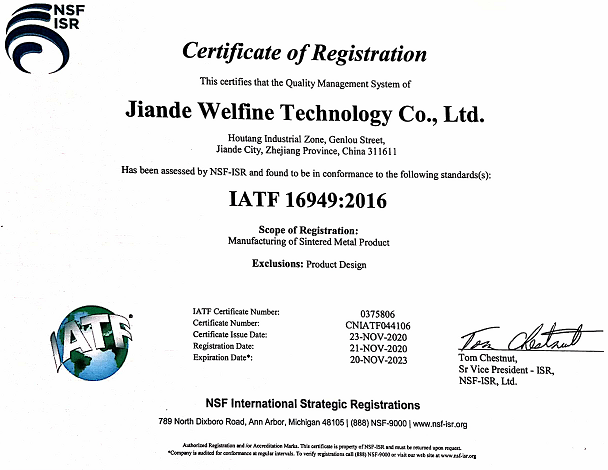
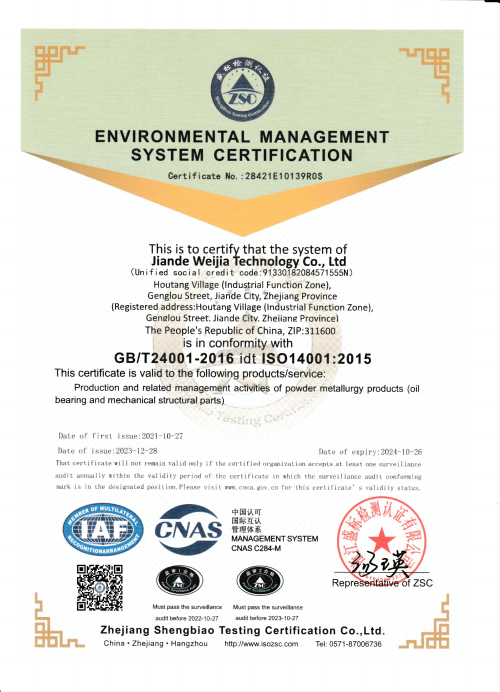
Certificate



FAQ
Q: How often do bushings need to be replaced?
Q: What happens when bushings go bad?
Q: How long do suspension bushings last?
Q: Can you drive with bad bushings?
Q: Do I need an alignment after replacing control arm bushings?
Q: Should I replace the whole control arm or just bushings?
Q: What does it cost to replace bushings?
Q: How do you diagnose bad bushings?
Q: What happens if you don't replace bushings?
Q: How long can you drive with a bad control arm?
Q: Can you just replace bushings?
Q: Will new bushings improve ride quality?
Q: What are the symptoms of a bad strut rod bushing?
Q: What happens if you don't fix control arm bushings?
Q: Do bushings come with control arms?
Q: Can you do an alignment with bad bushings?
Q: Can you replace control arm bushings yourself?
Q: What does a worn out bushing sound like?
Q: What is the lifespan of a bushing?
Q: How long does it take to change bushings?
Hot Tags: bushing brass sleeve, China, suppliers, manufacturers, factory, wholesale, customized, cast iron spur gear, tooth depth spur gear, fungsi drive pinion, power skiving cutters, precision spur gears, large spur gears