

IRON BEARING BUSHINGS, with the unique advantages of iron-based materials, are gradually emerging in many mechanical equipment fields. With the continuous innovation of technology, iron bearing bushings have made significant progress in design, materials, and processes.

1. What is an iron bearing bushing?
2 Technical advancement of iron bearing bushings
3. How do iron bearing bushings improve mechanical energy efficiency?
4. The impact of different types of iron bushings on mechanical energy efficiency
5. Application cases of iron bearing bushings
1. What is an iron bearing bushing?
Iron bearing bushings are made of iron-based materials. They are mainly used to bear radial and axial loads transmitted by the shaft, and can convert the sliding friction between the shaft and the bearing seat into smaller friction. They are widely used in various types of mechanical equipment.
2.Technical advancement of iron bearing bushings
The design and processing technology of iron bearing bushings are constantly optimized, the composition of iron alloys is improved, and its hardness and wear resistance are improved. The specific performance is as follows:
[Material Innovation]
High-strength alloys: chromium-molybdenum steel, nickel-chromium steel and other materials have become key materials for improving the performance of iron bearing bushings. Taking the crankshaft bearing of an automobile engine as an example, the hardness of the bushing made of chromium-molybdenum steel can be easily increased to more than HRC 60. When the engine is running at high speed, it is subjected to huge pressure and frequent impact. The high hardness and excellent fatigue resistance allow the bushing to work stably for a long time and adapt to high-load operating environments, reducing the frequency of failures caused by wear and extending the overall service life of the engine.
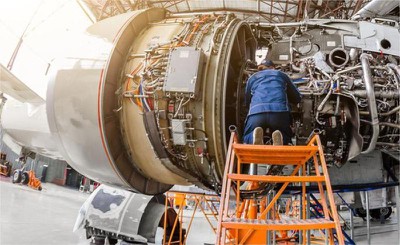
Iron-based composite materials: In the field of aerospace, iron-based composite bushings used in some mechanical parts working in high-temperature environments can reduce the friction coefficient to below 0.08, greatly reducing the friction loss between parts. During the operation of high-temperature parts of aircraft engines, they can effectively maintain a stable working state and ensure the efficient operation of the engine.
Lightweight solution: Using titanium-aluminum reinforced structure to achieve lightweight is an important direction for the current mechanical design to pursue high efficiency and energy saving. While maintaining the same load capacity, a 30% weight reduction was achieved.
[Technology innovation]
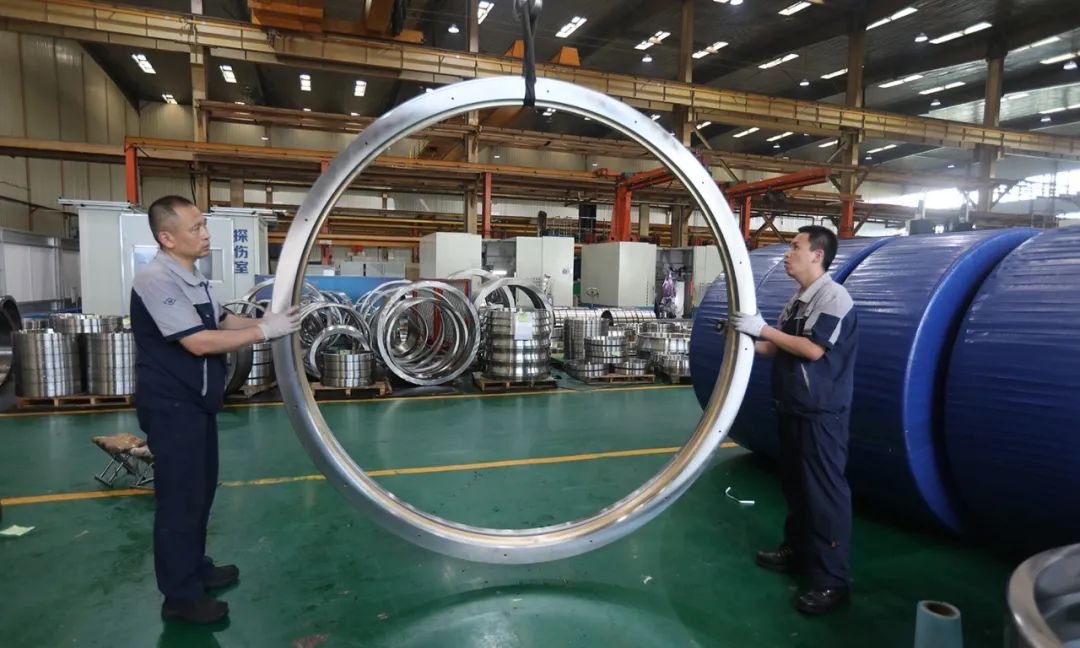
Precision casting: The dimensional accuracy can reach IT6 level, the dimensional error of the bushing is controlled within a very small range, and the surface roughness reaches Ra0.8μm, which effectively reduces friction resistance and reduces the degree of wear. In the manufacture of spindle bearing bushings for high-end machine tools, the precision casting process ensures the high precision and high quality of the product.
Powder metallurgy: The powder metallurgy process controls the porosity within 1% through fine control of the microstructure of the material, achieving a theoretical density of 95%. Its strength, hardness and wear resistance are significantly enhanced. In the transmission parts of some mining machinery with extremely high requirements for wear resistance, bushings manufactured by powder metallurgy can operate stably for a long time in harsh working environments.
3D printing: The emergence of 3D printing technology has opened up a new path for the manufacture of iron bearing bushings. It can make complex oil circuit structures form in one go. In the past, complex oil circuit designs that required cumbersome processing procedures and assembly of multiple parts could be realized. In the lubrication system of some high-end industrial equipment, this kind of bushing with complex oil circuit structure can achieve more efficient lubrication, ensuring that the equipment can be well lubricated and protected under different working conditions. It also provides convenience for product customization and meets the personalized needs of different customers.
[Surface engineering]
Carburizing/nitriding: After carburizing/nitriding treatment, the surface hardness of the bushing reaches 1200HV, and the core toughness is maintained at 30J/cm². Taking the bearing bushing of a large gearbox as an example, when subjected to huge torque and impact force, the high hardness of the surface can effectively resist wear and deformation, and the good toughness of the core ensures that the bushing will not break due to excessive brittleness, taking into account both surface strength and internal toughness, ensuring the stable operation of the gearbox.
DLC/TiN coating: In the micro-motor bearings of electronic equipment, bushings coated with DLC/TiN coating can reduce the friction coefficient by 40%, improve the wear resistance by 5 times, greatly extend the service life of the motor, and also reduce the energy loss during motor operation, improving energy utilization efficiency.

Laser strengthening: Laser strengthening technology forms a modified layer with a depth of 0.2-1.5mm by precisely inputting energy to the surface of the bushing. In the bearing bushings of marine engineering equipment, after laser strengthening treatment, the corrosion resistance is improved by 3 levels, which can effectively resist the corrosion of seawater.
【Intelligent Design】
Fluid dynamic pressure optimization: Through the optimization of fluid dynamic pressure, the oil film carrying capacity is increased by 50%. In the propulsion system of large ships, the significant improvement of the oil film carrying capacity of the bearing bushing ensures that the operation of the shaft system can be stably supported under different sailing speeds and load conditions, reducing the vibration and wear of the shaft system and improving the efficiency and reliability of the ship propulsion system.
Embedded sensing: Embedded sensing technology enables iron bearing bushings to have real-time monitoring capabilities, and can monitor temperature, vibration and load in real time with a monitoring accuracy of ±1%. In wind turbines, by real-time monitoring of the working status of bearing bushings, operation and maintenance personnel can timely understand the operation of the equipment, discover potential faults in advance, and carry out targeted maintenance, ensuring the stable operation of wind turbines and improving power generation efficiency.
Intelligent lubrication system: The application of intelligent lubrication system can not only save 30% of lubricating oil, but also extend the service life of bushings by 2 times. In the transmission equipment of industrial production lines, the intelligent lubrication system accurately controls the supply amount and supply time of lubricating oil according to the operating status and load conditions of the equipment, avoiding the waste of lubricating oil.
【Sustainable development】
Near-net forming process: Near-net forming process increases material utilization to 98%, which means that in the production process, almost all raw materials can be fully utilized, reducing resource waste. In large-scale machinery manufacturing industry, the use of near-net forming process to manufacture iron bearing bushings can save a lot of raw materials every year and reduce production costs.
Recyclable design: The recyclable design of 100% metal components can be recycled and reused, so that the iron bearing bushing can re-enter the production cycle after the end of its service life. In the automobile manufacturing industry, the iron bearing bushings used in large quantities can be recycled and reused after the car is scrapped, reducing the pollution of scrap metal to the environment, and also saving the mining and smelting costs of new metal materials.
Life cycle: The life cycle is extended by 3-5 times compared with traditional products, greatly reducing the replacement frequency. In construction equipment, the iron bearing bushings manufactured with advanced technology have a long life cycle that reduces the downtime and maintenance time of the equipment.
3. How do iron bearing bushings improve mechanical energy efficiency?
Under high load and high speed operation, the friction coefficient of iron bearing bushings is reduced to 0.02-0.05 (ASTM G99 test), which is more than 30% lower than the friction coefficient of ordinary steel.
Strengthening the wear-resistant system
Select alloy steel with alloy elements such as chromium, molybdenum and vanadium, and perform heat treatment processes such as quenching, tempering, carburizing and nitriding on iron bearing bushings to improve their organizational structure, hardness and wear resistance. Improve its wear resistance by 2-3 times, which is about 40% higher than that of traditional steel materials, and extend the service life of the bushing.
Reduce energy loss
The thermal conductivity of the improved material of the iron bearing bushing is more than 15% higher than that of traditional materials, and the actual energy saving can reach 5-10%. It can maintain better working performance in high temperature environment and reduce energy efficiency loss caused by heat accumulation.
4. The impact of different types of iron bushings on mechanical energy efficiency
Different types of iron sleeves have different effects on mechanical energy efficiency according to their differences in materials, structures, manufacturing processes, etc.
Material differences
Ordinary cast iron sleeves: Ordinary cast iron contains more impurities such as carbon, and has relatively low hardness and toughness. During the operation of mechanical equipment, it is prone to wear and deformation. When used as a sleeve, due to the poor surface wear resistance, the friction coefficient with the shaft is relatively large. Cast iron has poor corrosion resistance in complex working environments (such as corrosive media). After rusting, it will change the matching accuracy between the sleeve and the shaft, thereby increasing friction and reducing mechanical energy efficiency.
Alloy cast iron sleeves: Alloy cast iron sleeves are made by adding alloy elements such as chromium, nickel, and molybdenum to ordinary cast iron. The addition of these alloy elements changes the organizational structure of cast iron, which significantly improves the hardness, wear resistance, heat resistance, and corrosion resistance of the sleeve. Under the same working conditions, the friction coefficient between the alloy cast iron sleeve and the shaft is smaller. Taking the high-temperature rotating parts in automobile engines as an example, after using alloy cast iron sleeves, because they can withstand higher temperatures and pressures, they can still maintain stable mechanical properties when working at high temperatures, reducing the deformation of the sleeves and the increase in friction coefficient caused by temperature rise. Compared with ordinary cast iron sleeves, it can improve the mechanical energy efficiency by about 15% - 20%.

Structural differences
Integral iron sleeves: The integral iron sleeve is a complete cylindrical structure. The advantage of this structure is that the structural integrity is good and it can withstand large axial and radial forces. It has good applications in some mechanical equipment that require high sleeve stability. In the spindle part of large machine tools, the integral iron sleeve can ensure the stability when the spindle rotates at high speed and withstands large cutting forces. Due to its stable structure, the fit with the shaft is relatively tight and uniform under reasonable installation, so that the friction between the sleeve and the shaft is relatively regular, and the mechanical energy loss can be stabilized at a low level during long-term operation.
Split iron sleeves: The split iron sleeves are composed of two or more parts. This structure is easy to install and disassemble. It is very suitable for equipment that needs frequent repair and maintenance, or for some situations where the space is limited and the integral sleeve cannot be installed. From the perspective of mechanical energy efficiency, under the same normal operating conditions, there may be 5% - 10% more mechanical energy consumption than the integral iron sleeve.
Manufacturing process differences
Cast iron sleeve: The cast iron sleeve is made by casting process, which is prone to some casting defects. These defects will affect the mechanical properties of the sleeve, easily cause stress concentration during use, affect the contact between the sleeve and the shaft, and cause increased friction.
Processed iron sleeve: Taking the iron sleeve processed after forging as an example, the forging process can make the internal crystal structure of the iron material more compact and improve the mechanical properties of the material. This processed iron sleeve has less friction with the shaft during use, and can better adapt to high-speed and high-precision mechanical equipment. If this processed iron sleeve is used at the connection between the cooling fan shaft and the motor shaft of some high-speed and precision electronic equipment, the mechanical energy loss caused by the friction of the sleeve during the rotation of the fan can be reduced to a minimum, and the mechanical energy efficiency can be improved by about 12% - 18% compared with ordinary cast iron sleeves.
5. Application cases of iron bearing bushings
Wind power industry
The generator has extremely high requirements for mechanical energy efficiency, and the main shaft and gearbox need high-performance bearing bushings to support it. The relevant company uses iron bearing bushings. After one year of operation test, compared with traditional copper alloy bushings, the energy efficiency is improved by 8% and the equipment failure rate is reduced by 12%.

Machine tool industry
In the field of CNC machine tools, the friction characteristics of bearing bushings directly affect the accuracy and efficiency of machine tools. High-precision CNC machine tools using iron bearing bushings can effectively reduce energy loss and heat accumulation under continuous high loads, reduce energy consumption by 6%, and significantly improve production efficiency.
