


Jiande Welfine Technology Co., LTD is a company with a high standard factory building of 14,000 square meters, in the beautiful scenic spot on the Xin 'an River by the bank of Qiandao Lake, focusing on powder metallurgy products for 21 years. We are a professional and experienced team dedicated to providing quality products such as bearings and automotive parts to customers around the world.Our main partners are from Europe and America, which proves that the quality of our products is recognized by the international market. We have our own independent laboratory, which can carry out strict quality testing on each batch of products to ensure that each product meets the requirements of customers.We believe that trust is built on quality and service, so we focus on product quality and customer service. Our products can be used with confidence and are a powerful assistant to your business success.We have a positive attitude, constantly innovate, improve process technology and quality standards, not only to satisfy customers, but also to make our employees proud and recognized. We will continue to build the highest quality products and services, become industry leaders, and create a better future.
company advantage
Professional team
We are a professional and experienced team dedicated to providing high-quality bearings, auto parts and other products to customers around the world.
QC
We have our own independent laboratory that can conduct strict quality testing on each batch of products to ensure that each product meets customer requirements.
Rich experience
We focus on powder metallurgy, with 17 years of experience, and have won a good reputation, quality and integrity in this field.
Customer service
We earn your respect by delivering on time and on budget. Our reputation is built on excellent customer service. Discover the difference it makes.
Related Product

If you are not familiar with the products, we have experienced engineers to teach you how to use and maintain the products, to explain to you the manufacture process of the produces.benefit.

Structure Parts Sintered Gears
Gears have many typical applications. Such as Power Tools, Agriculyural Machinery, Home Appliances

Powder Metallurgy Sintered Iron Gear
Sintered Fe-Cu Alloy and sintered Fe-Cu-C are the most application in the production of sintered structural parts and different Powder Metallurgy Sintered Iron Small Spur Gears.

If you are interested in our spur gear quora, please feel free to contact us, we will provide samples and quotations as soon as possible!

If you are interested in our powder metal gear, please don't hesitate to contact us, we will provide samples and quotations as soon as possible!

Oil-impregnated; Self-lubricating
Wear resistant and long life service
High performance bearing can be in extreme load, low speed reciprocating and oscillating applications Good thermal conductivity property

Sintered gear material uses high-quality materials and has been processed by advanced technology, which has the advantages of good running effect, no rust and no aging, etc.

Oil-impregnated; Self-lubricating
Wear resistant and long life service
High performance bearing can be in extreme load, low speed reciprocating and oscillating

Stainless Steel Spur Small Spur Gears
Engineered with precision-cut teeth arranged in a straight line along their cylindrical surface, stainless steel spur Small Spur Gears efficiently transfer rotational motion between parallel shafts. Their simple yet effective design ensures smooth and precise power transmission, providing consistent speed and torque output.
Sint D11 Machined Small Spur Gears
Small Spur Gears are also known as cogs and have cut teeth in the cogwheel or gear wheel. These teeth mesh together, and are used to transfer torque and speed. Small Spur Gears are mechanical devices that work on the level principle. The direction, speed and torque of the power device can be changed by the presence of Small Spur Gears. Small Spur Gears are simple machines that can be different sizes and produce a different amount of torque, giving a mechanical advantage. The speed depends on the rotational speed and diameter of two meshed structures attached to it. The shape of teeth in all the Small Spur Gears are the same and evenly spaced. The teeth provide torque and prevent slipping Small Spur Gears.
Benefits of Small Spur Gears
Noise Reduction
The first benefit of a helical gear train is that the teeth of the gear engage in small increments as opposed to the entire face engaging at once. This reduces the noise that is normally caused as Small Spur Gears transfer power.
Transfer of Power Between Non-Parallel Shafts
Another aspect to think about is whether or not your project requires power to be transferred between non-parallel shafts. Helical Small Spur Gears allow for this happen, but sometimes this comes at the cost of efficiency, which is another element to consider.
Strength Output
The final advantage that Small Spur Gears provide over spur Small Spur Gears is the strength output. Helical Small Spur Gears can handle more load than spur Small Spur Gears because the helical gear tooth is diagonally positioned and therefore effectively larger. For same tooth size and equivalent width, helical Small Spur Gears will provide superior strength.
What are the Applications of Small Spur Gears
Change Of Torque
Torque is the rotating force that is produced by motors and engines that is adjusted through the use of Small Spur Gears, gear sets, gearboxes, and gear assemblies. Smaller Small Spur Gears produce less torque while large Small Spur Gears produce higher amounts of torque. When a small gear is the drive gear to power a large gear, the amount of torque increases and speed decreases. Taken in reverse, when a large gear is the drive gear and a small gear is the powered gear, the amount of torque decreases and speed increases.
Transmitting Power
During the transmission of power, Small Spur Gears intermesh with other Small Spur Gears without slipping and strongly retain their connections. The motor in a machine may not be designed to move a shaft directly and uses Small Spur Gears to transmit power to the shaft to power a tool.
Setting Rotation Speed
One of the main functions of Small Spur Gears is to change the rotation speed of power with engines being the most common example. Small Spur Gears regulate power by their ratios with different sizes of Small Spur Gears used to increase or decrease transmitted power by their rotation.
Direction of Power
A common use for Small Spur Gears is the changing the direction of rotation or movement, which is completed by the specific design of gear pairs. The rotational direction of a motor is dependent on the rotation of a shaft with the direction of the rotation capable of being changed by the configuration of the Small Spur Gears.
Gearboxes
Gearboxes are one of the most common uses of Small Spur Gears and are made up of an assortment of gear types contained in a housing. Gearboxes contain worm, bevel, helical, and spur Small Spur Gears that are engineered to change torque, speed, power, motion, and force. Gearboxes are a foundational part of motor driven vehicles and gas powered machinery.
Types of Small Spur Gears
Bevel Small Spur Gears are conical in shape and the teeth of this gear are placed around its conical surface. These Small Spur Gears are used in applications where there is a need for change around its axis of rotation. These Small Spur Gears transmit energy and power to the intersecting shafts by changing its rotation. The configuration angles that are required for bevel Small Spur Gears is usually 90 degrees though not always. Bevel Small Spur Gears are made with cast steel, plain carbon steel, and alloy steels. All have different characteristics and can be used according to their applications.
Crown bevel Small Spur Gears, also known as face Small Spur Gears and contrate Small Spur Gears, have helical teeth in the form of a spiral with a pitch angle that is equal to 90°. They mesh with other bevel Small Spur Gears, spur Small Spur Gears, and a pinion system to change rotary motion at a right angle. The projection of the teeth at a right angle to the plane of the wheel gives them the appearance of being a crown. Unlike conical bevel Small Spur Gears, crown bevel Small Spur Gears are cylindrical to be paired with other Small Spur Gears according to tooth design.
Hypoid bevel Small Spur Gears are able to transmit rotational power between two shafts at right angles and are mostly used in the drive trains of heavy duty trucks. Sets of hypoid Small Spur Gears do not intersect because the smaller gear shaft, pinion, is offset from the larger gear shaft or crown. The axis offset allows the pinion diameter to be larger and have a greater spiral angle, which increases the contact area and tooth strength.
Miter Small Spur Gears are used as right angle drives with a 1:1 gear ratio between intersecting shafts and used in conditions that require high efficiency. The meshing between miter Small Spur Gears requires that both Small Spur Gears have the same number of teeth, pitch, and pressure angle with more than two miter Small Spur Gears capable of being used in sets. The thrust of miter Small Spur Gears causes them to separate and necessitates the use of ball bearings or sleeve bearings to absorb the backward thrust. All miter Small Spur Gears are mounted at right angles with hardened miter Small Spur Gears providing 50% more horsepower capacity and can endure greater wear than miter Small Spur Gears that are not hardened.
Components of Small Spur Gears
Addendum
The teeth of Small Spur Gears extend outward for external Small Spur Gears and inward for internal Small Spur Gears from the pitch circle. This projection of Small Spur Gears is the radial distance between the pitch diameter and the diameter of the gear, which is referred to as the addendum with the tops of the gear teeth forming the addendum circle.
Axis
The axis controls the direction of gear movement and how that motion is translated. Parallel axes are the most common form of axis where two axes are parallel. With intersecting axes, the axes are perpendicular to each other and are used to change the direction of motion. Although parallel and intersecting are the most common form of axes, there are Small Spur Gears that are not parallel and do not intersect.
Base Circle
The base circle is a theoretical construct that is used to generate the involute curve for the creation of tooth profiles.
Circular Pitch
The circular pitch is the distance from a fixed point on one tooth to the same fixed point on an adjacent tooth, which is measured along the pitch circle. The measure is in the form of an arc and not line due the curve of a gear. In order for Small Spur Gears to mesh properly, the circular pitch, also referred to as the space between the teeth, of both Small Spur Gears must be equal.
Teeth
Teeth of a gear project outward or inward depending on the design of the gear. When they project outward, the teeth on the circumference of the gear are used to transmit rotation. When they are on the inside of the gear, they are referred to as internal Small Spur Gears, which are matched with an external gear and commonly used for planetary gear drives.
Materials Used in Small Spur Gears
Rolled Steel
Rolling is a metal forming process that involves the use of a set of rollers that alter the shape of the metal, improve its uniformity, and enhance its mechanical properties. The rolling process is divided into cold rolling and hot rolling, which have distinct characteristics that make steel suitable for different applications. When selecting steel to manufacture Small Spur Gears, it is essential to understand the differences between the two methods of manufacturing since they affect the performance of the metal.
Cold Rolled Steel
Cold rolled steel is an iron based alloy that is made from one or many different kinds of chemical compositions with the majority having a low carbon content. For the manufacture of Small Spur Gears, low to medium carbon steel is used. Cold rolled steel is hot rolled and undergoes various processes to improve its dimensional and mechanical properties. During the rolling process, cooled heated rolled steel passes through a series of rollers at room temperature under high pressure. It is an expensive process that achieves tight dimensional tolerances and an improved surface finish.
Tool Steel Alloys
Tool steel alloys have a high carbon chrome content with differing amounts of molybdenum, cobalt, vanadium, and other essential elements. They are ideal for gear production due to their ability to withstand high loads, ability to endure impact at room temperature, and exceptional wear resistance. Tool steel alloys come in an annealed condition, which softens the material such that it can be machined or formed. The grades of tool steel include MTEK A2, MTEK A6, MTEK D2, and MTEK D5, and MTEK H13.
Iron Alloys
The first choice of material for Small Spur Gears that require superior strength are iron alloys with carbon steel used for all types of gearing applications because it is easy to machine, is wear resistant, can be hardened, is widely available, and is inexpensive. The classifications of carbon steel include mild steel, medium carbon steel, and high carbon steel. Mild steel alloys have less than 0.3% carbon while high carbon steels have greater than 0.6% carbon content. Mild, medium, and high carbon steels are used to manufacture spur Small Spur Gears, helical Small Spur Gears, gear racks, bevel Small Spur Gears, and worm Small Spur Gears.
How to Choose Small Spur Gears
The geometry of a gear involves several critical factors, each contributing to the gear's performance. The tooth profile, pitch, and helix angle must all be tailored to meet the specific demands of your machinery's operation. Precision in the design of these elements ensures smooth engagement and efficiency while reducing the potential for premature wear or failure.Helical Small Spur Gears are often favored for their smoother and quieter operation compared to spur Small Spur Gears. The angled teeth engage more gradually, providing a more constant transfer of power. Helical Small Spur Gears are ideal for high-speed or heavy-load situations but require careful alignment and may generate additional axial forces.
Understanding the load capacity of Small Spur Gears is essential for maintaining the integrity of industrial machinery. The load a gear can carry without risk of failure is determined by factors such as its size, material, and the quality of manufacture. Safety factors should be implemented to prevent overloading, which could lead to catastrophic failures and downtime.Calculating the expected loads can be complex, as both dynamic loads and static loads must be considered. Dynamic loads are particularly important as they account for the operational stresses encountered during regular use, including the impact of speed and torque changes. Regular monitoring and testing can help ensure Small Spur Gears are not subjected to unforeseen overloading.
Environmental factors cannot be overlooked when selecting Small Spur Gears for machinery. Exposure to elements such as moisture, dust, chemicals, and temperature extremes can greatly influence gear performance and lifespan. Small Spur Gears must be chosen with materials and coatings that are appropriate for their operating environment to mitigate potential degradation.Corrosive environments, for example, demand Small Spur Gears made from materials or with coatings that can withstand degradation from harsh chemicals or continuous moisture. Materials like stainless steel or bronze, or coatings such as nickel plating, can be effective defenses against such conditions.
Process Of Small Spur Gears
Increase Speed
If two wheels are connected to each other and one has 40 teeth and the other has 20 teeth, then the smaller one with 20 teeth will move twice the speed as the first one to keep up the pace of both wheels. The speed will increase but the force will be reduced for the smaller wheel to move.
Increase Force
If the smaller wheel has more teeth rather than the bigger one then its speed will slow down and force will increase. It means more force will be required by the smaller wheel to move.
Change Direction
If the two Small Spur Gears that are connected to each other move, then one gear will move clockwise and the other will move anti clockwise. If we want to turn the angles of its movement then we have to use a special type of Small Spur Gears that are specific for this function.
How to Maintain Small Spur Gears
Choose the right lubricant
The first step to lubricate your Small Spur Gears is to choose the right lubricant for your specific needs. There are different types of lubricants, such as oils, greases, and solid films, each with its own advantages and disadvantages. You should consider factors such as viscosity, additives, compatibility, stability, and performance when selecting a lubricant. You should also follow the manufacturer's recommendations and specifications for your gear type and material.
Apply the correct amount
The second step to lubricate your Small Spur Gears is to apply the correct amount of lubricant to the contact surfaces. Too much or too little lubricant can cause problems, such as leakage, contamination, overheating, or insufficient protection. You should use a suitable method and device to deliver the lubricant, such as a pump, a spray, a brush, or a drip feed. You should also monitor the level and condition of the lubricant regularly and replenish or replace it as needed.
Clean and inspect the Small Spur Gears
The third step to maintain your Small Spur Gears is to clean and inspect them periodically for any signs of damage, wear, or corrosion. You should use a soft cloth, a brush, or a solvent to remove any dirt, dust, or debris from the gear teeth and surfaces. You should also check for any cracks, chips, pitting, scoring, or misalignment that could affect the performance or safety of your Small Spur Gears. You should report and repair any defects or abnormalities as soon as possible.
Adjust and align the Small Spur Gears
The fourth step to maintain your Small Spur Gears is to adjust and align them properly to ensure smooth and accurate operation. You should use a gauge, a dial indicator, or a laser to measure the backlash, the center distance, the pitch, and the pressure angle of your Small Spur Gears. You should also verify that the shafts, bearings, and couplings are in good condition and aligned with the Small Spur Gears. You should make any necessary adjustments or corrections to avoid excessive stress, vibration, or noise.
Protect the Small Spur Gears from harsh conditions
The fifth step to maintain your Small Spur Gears is to protect them from harsh conditions that could degrade their quality or performance. You should avoid exposing your Small Spur Gears to extreme temperatures, humidity, dust, chemicals, or water that could cause thermal expansion, rust, erosion, or corrosion. You should also use appropriate seals, covers, or coatings to prevent contamination or damage. You should also follow the environmental and safety regulations for your industry and location.
Schedule regular maintenance
The sixth and final step to maintain your Small Spur Gears is to schedule regular maintenance according to a plan or a calendar. You should follow the manufacturer's instructions and guidelines for your gear type and application. You should also keep a record of the maintenance history, the lubricant usage, the inspection results, and the repair actions for your Small Spur Gears. You should also train your staff or hire a professional to perform the maintenance tasks correctly and safely.
Our Factory
Jiande Welfine Technology Co., LTD is a company with a high standard factory building of 14,000 square meters, in the beautiful scenic spot on the Xin 'an River by the bank of Qiandao Lake, focusing on powder metallurgy products for 21 years. We are a professional and experienced team dedicated to providing quality products such as bearings and automotive parts to customers around the world.Our main partners are from Europe and America, which proves that the quality of our products is recognized by the international market. We have our own independent laboratory, which can carry out strict quality testing on each batch of products to ensure that each product meets the requirements of customers.We believe that trust is built on quality and service, so we focus on product quality and customer service. Our products can be used with confidence and are a powerful assistant to your business success.We have a positive attitude, constantly innovate, improve process technology and quality standards, not only to satisfy customers, but also to make our employees proud and recognized. We will continue to build the highest quality products and services, become industry leaders, and create a better future.


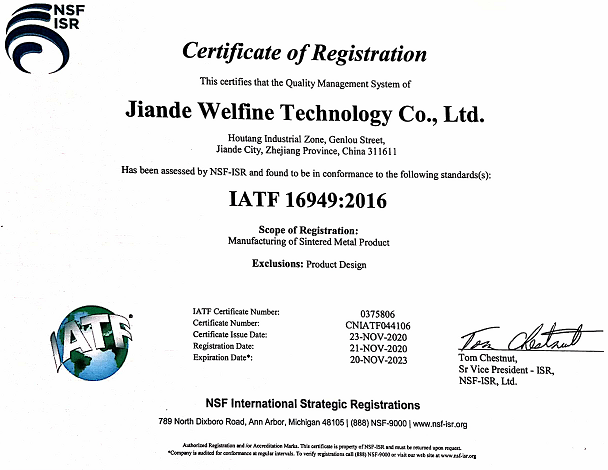
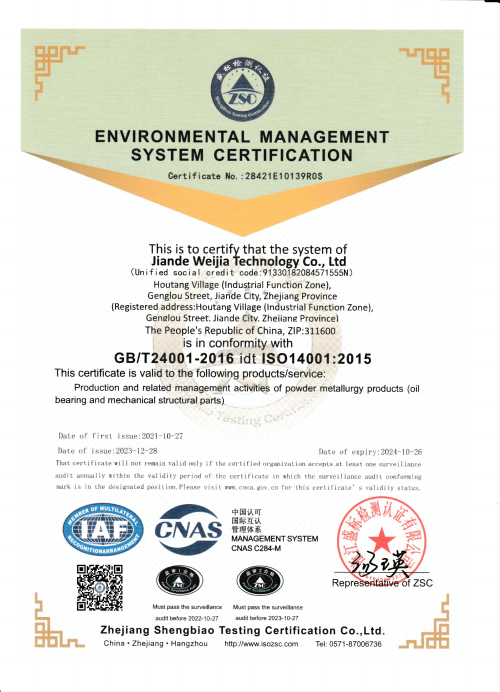
Certificate



FAQ
Q: What is an example of a gear?
Q: What is a gear for kids?
Q: What is the most common type of gear?
Q: What is the quietest gear type?
Q: What is a simple gear in real life?
Q: What is an example of a simple gear in real life?
Q: What are Small Spur Gears Grade 8?
Q: What is a gear Grade 4?
Q: What everyday objects have Small Spur Gears?
Q: What is gear teeth?
Q: What is the simplest type of gear?
Spur Small Spur Gears are the simplest type of gear. They have straight cut teeth that are aligned parallel to the axis of rotation and therefore exhibit rolling contact. They give a simple and effective way to transmit power.
Q: What would life be like without Small Spur Gears?
Q: Why do Small Spur Gears always have an odd number of teeth?
Q: How does a bevel gear work?
Q: Is 1st gear the slowest?
Q: Which gear is the strongest?
Q: Is a gear a lever?
Q: What is a gear kids?
Q: What are the 6 simple machines?
Q: Which gear will turn most slowly?
Hot Tags: small spur gears, China, suppliers, manufacturers, factory, wholesale, customized, 42 tooth spur gear, spur gear, 9 tooth starter pinion gear, 12t pinion gear, high pinion, wire edm gears