

In the hidden corners of mechanical equipment, a thumb-sized ring-shaped part is quietly controlling the mechanical life and operation accuracy. They are neither as eye-catching as gears nor require regular oiling and maintenance like bearings, but they caused an uproar at the 2024 U.S. Congressional hearing because the purchase price of a single bag was as high as $90,000. This article will reveal the five little-known truths of the bushing industry from the dimensions of material revolution, military secrets, and automotive black technology.
Table of Contents
1. The dilemma of the military industry chain behind the U.S. military's sky-high purchase
2. The thousand-year material evolution history from bronze to nylon
3. "Shock absorber commander" on the car chassis
4. The industry iron law that the lubrication state determines the 5-fold life difference
5. Selection errors cause the scrapping of equipment worth over 100 million US dollars
1. The dilemma of the military industry chain behind the U.S. military's sky-high purchase
The U.S. Air Force procurement case exposed in April 2024 showed that a bag of 500 grams of ordinary nylon bushings cost $90,000, a 10,000-fold increase compared to the civilian market price. In-depth investigation found that the root cause of this price distortion lies in the closed-loop procurement system of the military-industrial complex:
Sole supplier trap: The Pentagon forces procurement from original equipment manufacturers (OEMs) to cut off market-based price comparison channels
Technology bundling: Giants such as Lockheed Martin write bushing parameters into equipment patents to form exclusive technical barriers
Detection cost black hole: Military bushings must pass 137 tests such as -50℃~300℃ temperature change and salt spray corrosion, and the cost of a single piece certification exceeds US$4,000
Compared with my country's automotive bushing industry, a Zhejiang company adopts an open supply chain, and the testing cost of products with the same specifications is controlled at US$23, which confirms the decisive role of transparent procurement in cost control.
2. The thousand-year evolution of materials from bronze to nylon
From bronze bushings from the Shang and Zhou dynasties to aerospace-grade polyimide bushings, material innovation has always driven the mechanical revolution:

Bronze Age (1600 BC -)
The chariot bushings unearthed in Yinxu, Henan, give us a deeper understanding of ancient bushing materials. The tin content of these bushings reached 18%, which is surprisingly similar to the ZCuSn10Pb1 composition of the modern national standard GB/T1176-2013. In that era, bronze was a very important metal material. It had high hardness and wear resistance, which could meet the needs of chariots during driving. As an important war tool at that time, the performance of chariots was directly related to the victory or defeat of the war. As one of the key components of chariots, the quality of bushings also had an important impact on the performance of chariots. Through continuous practice and exploration, ancient craftsmen mastered the smelting and processing technology of bronze, manufactured high-quality bushings, and provided a guarantee for the stable operation of chariots.
The Age of Steel (Industrial Revolution)
The advent of the Industrial Revolution made steel the main industrial material. During this period, the emergence of molybdenum-containing alloy steel bushings brought great changes to the machinery industry. In the era of steam engines, the life of bearings was an urgent problem to be solved. The life of early steam engine bearings was very short, only about 80 hours. This not only affected the normal operation of the steam engine, but also increased maintenance costs. The application of molybdenum-containing alloy steel bushings has increased the life of steam engine bearings from 80 hours to 2000 hours. This material has higher strength and wear resistance and can withstand greater pressure and friction. Its appearance has greatly improved the performance of steam engines and laid the foundation for the further development of the industrial revolution.
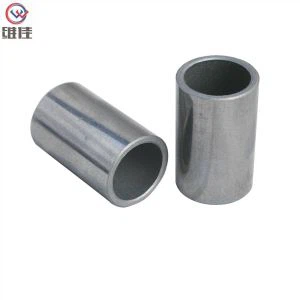
Polymer Revolution (1950s)
In the 1950s, the development of polymer materials ushered in a new stage. The PTFE bushing developed by DuPont has attracted widespread attention for its excellent performance. The friction coefficient of PTFE bushings is as low as 0.04, which is 87% lower than that of traditional metals. This means that during the operation of mechanical equipment, the use of PTFE bushings can greatly reduce friction, reduce energy loss, and improve the operating efficiency of equipment. At the same time, PTFE materials also have good chemical stability and corrosion resistance, and can be used in harsh environments. The emergence of this bushing has brought new development opportunities to the machinery industry and promoted the development of mechanical equipment towards a more efficient and precise direction.
Composite materials (2020s)
In the 2020s of the 21st century, composite materials have become a new direction for the development of bushing materials. The application of carbon fiber reinforced polyetheretherketone (CF/PEEK) bushings on Mars rovers demonstrates the powerful advantages of composite materials. In such an extreme environment as Mars, the probe needs to be able to withstand the test of various harsh conditions such as high temperature, low temperature, and radiation. CF/PEEK bushings have the characteristics of high strength, high stiffness, high temperature resistance, and wear resistance, and can achieve stable operation under zero lubrication. The application of this bushing provides strong support for human exploration of the universe.
At present, the frontier field is committed to the development of "self-sensing bushings". This bushing can monitor its own wear status in real time by embedding micro sensors. In the operation of mechanical equipment, bushing wear is an inevitable problem. If the wear of the bushing can be understood in time, it can be replaced in advance to avoid equipment failure due to bushing wear. The research and development of self-sensing bushings will provide new means for the intelligent maintenance of mechanical equipment and further improve the reliability and safety of equipment.
3. "Shock Absorption Commander" on the Automobile Chassis
Among the many parts of a car, the chassis system plays a vital role. It not only supports the weight of the car, but also ensures the driving stability and comfort of the car. In the chassis system of Tesla Model S Plaid, 12 sets of special rubber bushings have become the core of the NVH (noise, vibration and harshness) performance of the whole vehicle.
Frequency modulation
The stiffness of the front suspension bushing is controlled at 35-50N/mm, and the setting of this parameter is of great significance. During the driving of the car, the road surface will produce various vibrations. The frequency range of these vibrations is very wide, among which the road vibration of 2-15Hz has a greater impact on the comfort of the car. The front suspension bushing can effectively filter out the vibrations within this frequency range through precise stiffness control. When the car is driving on an uneven road, the bushing is like a "filter", absorbing and isolating most of the harmful vibrations, so that the passengers in the car can feel a more stable and comfortable driving experience.
Angle compensation
The flanged bushing has a unique design that can withstand a 20° deflection. During the driving of the car, especially when making sharp turns, the suspension will undergo a large angle change. If the bushing cannot withstand this angle change, the geometric accuracy of the suspension will be affected, which in turn affects the handling performance of the car. The emergence of the flanged bushing solves this problem. It can ensure the geometric accuracy of the suspension while withstanding a large angle deflection, so that the car can still maintain a stable driving state when making sharp turns.
Temperature adaptation
The bushing made of hydrogenated nitrile rubber (HNBR) performs well in temperature adaptation. At a low temperature of -40°C, it can still maintain an elastic modulus of >5MPa. This means that the bushing can still maintain good elasticity and performance under cold weather conditions. In contrast, some ordinary rubber materials will become stiff and lose elasticity in low temperature environments, thus affecting the normal function of the bushing. HNBR bushings provide reliable protection for the driving of cars in extreme temperature environments.
However, in a new energy vehicle axle break accident that occurred in China in 2024, we saw the importance of bushing quality. After investigation, it was found that the direct cause of the accident was the illegal use of cheap EPDM rubber bushings. This kind of bushing will become brittle and lose elasticity in a low temperature environment of -40℃. When the car is driving in this environment, the bushing cannot function normally, which eventually leads to the occurrence of axle breakage accident. This case reminds us that in the process of automobile manufacturing, we must strictly select suitable bushing materials to ensure the safety and reliability of the car.
4. The industry iron law that the lubrication state determines the 5-fold life difference
In order to deeply understand the impact of lubrication state on the service life of the bushing, relevant institutions conducted a survey of 356 manufacturing companies. The survey data showed that the level of lubrication management directly determines the service life of the bushing, and different lubrication states will lead to huge differences in the life of the bushing.
| Lubrication status | Average life (hours) | Failure mode |
|---|---|---|
| Continuous oil film lubrication | 18,000 | Normal wear |
| Intermittent grease lubrication | 8,500 | Abrasive erosion |
| Unlubricated dry friction | 3,200 | Seizure caused by adhesive wear |
Continuous oil film lubrication
When the bushing is in a continuous oil film lubrication state, the lubricating oil will form a uniform oil film on the surface of the bushing. This oil film is like a protective film, which can effectively reduce the friction and wear between the bushing and other components. Under this lubrication state, the bushing wears very slowly, and the average life can reach 18,000 hours. During normal operation, the bushing will only experience slight wear and tear, which will not significantly affect its performance.
Intermittent grease lubrication
Intermittent grease lubrication is a relatively poor lubrication method. In this lubrication state, the grease cannot continuously provide lubrication to the bushing and can only be replenished at certain time intervals. This causes the bushing to lack lubrication for some time during operation. In the absence of lubrication, the surface of the bushing will be eroded by abrasive particles and the wear rate will accelerate. Therefore, the average life of the bushing under intermittent grease lubrication is only 8,500 hours.
Non-lubricated dry friction
Non-lubricated dry friction is the worst lubrication state. In this state, the bushing is in direct contact with other components without any protection from the lubricating medium. This causes extremely high friction and temperature on the surface of the bushing, which causes adhesive wear. As the wear increases, the bushing will gradually get stuck and cannot work properly. The average life of the bushing under non-lubricated dry friction is the shortest, only 3,200 hours.
A machine tool company in Japan has a deep understanding of the importance of lubrication to the life of the bushing. In order to increase the service life of the linear guide bushing, the company installed an automatic oiling system. Through the automatic oil injection system, the bushing can always maintain a state of continuous oil film lubrication. This measure has achieved remarkable results, and the replacement cycle of the linear guide bushing has been extended from the original 6 months to 5 years. This not only reduces the company's maintenance costs, but also improves the operating efficiency and reliability of the machine tool.
5. Selection errors lead to the scrapping of equipment worth over 100 million US dollars
In 2023, a wafer factory encountered a serious crisis. Due to the wrong selection of bushings, batch failures of photolithography machines occurred, causing huge losses to the company.
Wrong decision
In order to reduce costs, the wafer factory made a wrong decision: to use ordinary MC nylon bushings instead of PEEK bushings. PEEK material has excellent performance. It has the characteristics of high heat resistance, high strength, and low friction coefficient. It is very suitable for use in high-precision equipment such as photolithography machines. Although ordinary MC nylon bushings are cheaper, there is a big gap in performance with PEEK materials.
Chain reaction
This wrong selection decision triggered a series of chain reactions. First, due to the difference in thermal expansion coefficient, ordinary MC nylon bushings will produce large dimensional changes during operation. This size change resulted in a positioning deviation of 0.7μm. In high-precision equipment such as lithography machines, even a small positioning deviation will have a serious impact on the processing quality of the wafer. Due to the positioning deviation, the yield of the entire batch of wafers plummeted to 12%. This means that most of the wafers have become scrapped, causing huge economic losses to the company. In order to avoid further losses, the company had to stop production urgently. This shutdown caused a loss of 120 million US dollars and had a serious impact on the development of the company.
Lessons Learned
This incident sounded the alarm for the entire industry. In order to avoid similar accidents from happening again, the "PV value calculation method" for bushing selection was born. This method avoids risks through the hard indicator of pressure (P) × speed (V) ≤ 15MPa·m/s. When selecting bushings, companies can calculate the corresponding PV value based on the working pressure and speed of the equipment, and then select bushings that meet the requirements. This method can effectively ensure the accuracy of bushing selection and improve the reliability and stability of equipment.
Summary
From the dilemma of the military industry chain behind the sky-high purchase price of the US military to the self-sensing bushing with nano-level precision control; from the ancient bushings in the Bronze Age to the innovative application of modern composite materials, the bushing, a seemingly inconspicuous "industrial capillary", is writing its own brilliant technological epic.
FAQ
1. What is a bronze bushing sleeve, and how does it differ from traditional bushings?
A bronze bushing sleeve is a cylindrical component made of bronze that serves as a bearing surface to reduce friction between moving parts. Unlike traditional bushings, which may be made of various materials, the bronze sleeve specifically leverages the unique properties of bronze for enhanced durability, wear resistance, and self-lubrication.
2. What are the advantages of using a bronze bushing sleeve in industrial applications?
Bronze bushing sleeves provide several advantages in industrial settings. Their self-lubricating nature reduces the need for external lubrication, minimizing maintenance requirements. Additionally, the inherent properties of bronze, including wear resistance and stability, contribute to prolonged service life and reliable performance in diverse operating conditions.
3. In what industries are bronze bushing sleeves commonly employed, and why?
Bronze bushing sleeves find common use in industries such as automotive, aerospace, and manufacturing. Their durability, resistance to wear, and self-lubricating properties make them ideal for applications where reliable and low-maintenance bearing solutions are crucial, contributing to the efficiency of machinery and equipment.