

Bushings and bearings are critical components in a variety of mechanical systems, but they are not the same. Their primary function is to reduce friction and facilitate smooth motion between two parts that are in contact with each other. Although their uses are similar, bushings and bearings differ in design, materials, applications, and performance characteristics. These differences can significantly affect the efficiency, life, and reliability of a mechanical system. Understanding when to use a bushing or a bearing is critical to selecting the right solution for a specific machine. Bushings are generally simpler, cost-effective, and often used in low-speed, low-load applications, while bearings are more complex and designed to meet higher speed, load, and precision requirements. Understanding the advantages and limitations of each type of bearing can help engineers and designers make more informed decisions and avoid costly mistakes. In this article, we will take a closer look at the key differences between bushings and bearings, explore the unique benefits of each, and discuss how to choose the ideal component based on your specific needs and operating requirements. Let's dive into the mechanics of these important components!
Content
1.Definition Explanation
Bushings
A bushing is a simple mechanical component used to reduce friction between mechanical parts. It is usually made of materials such as metal, plastic or rubber, installed between the shaft and the hole, supporting the shaft and reducing wear. Bushings help reduce friction between the shaft and the hole by providing a sliding surface, reducing wear and noise of the equipment. Compared with bearings, bushings have a simple structure and low cost, and are often used in low-speed and low-load applications, such as automobiles, household appliances, tools and machinery and equipment. The advantages of bushings include corrosion resistance, low friction coefficient and simple maintenance, but due to their simple structure, they are generally not suitable for high-speed or high-load applications.

Bearings
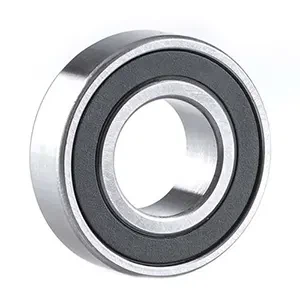
Bearings are elements used to support rotating parts in mechanical systems, designed to reduce friction and support loads. Unlike bushings, bearings usually contain rolling elements (such as balls or rollers) and inner and outer rings. These rolling elements can effectively disperse the load, reduce friction, and make the parts more stable when rotating. Bearings are widely used in moving parts that require high efficiency and low friction, and are commonly found in automobiles, mechanical equipment, power tools and other fields. There are many types of bearings, such as ball bearings, needle bearings and cylindrical bearings, which provide high precision and durability according to different load and motion requirements and are suitable for high-speed and heavy-load applications.
2.Characteristic Comparison
When choosing bushings and bearings, it is important to understand the differences in their structure, working principle, application scenarios, and performance. Although the functions of the two are similar, they have significant differences in design, working methods, and applicable environments. Below we will make a detailed comparison from four perspectives to help you better understand these two common mechanical components.
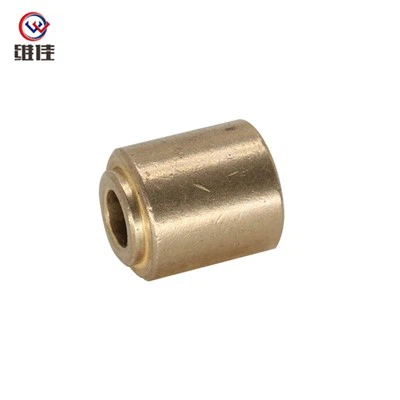
The structure of the bushing is relatively simple, usually a cylindrical hollow component, made of a variety of materials such as metal, plastic or rubber. The design of the bushing mainly relies on the sliding friction between the inner surface and the shaft to achieve the friction reduction function, and no rolling elements are required in the structure. This makes the bushing low-cost, simple to install and maintain, and suitable for environments with limited space and low precision requirements. In contrast, the structure of the bearing is much more complicated, usually consisting of inner and outer rings, rolling elements and cages. The design of the rolling elements allows the bearing to reduce friction while bearing loads, improving the smoothness and precision of movement. As a result, the manufacturing process of the bearing is more sophisticated, the cost is higher, and it is suitable for environments that require higher performance standards.
The working principle of bushings relies on sliding friction between the shaft and the bushing. When the shaft rotates through the bushing, the bushing directly contacts the shaft surface, generating sliding friction to reduce the wear of the mechanical parts. Bushings are suitable for low speed and light load applications because they mainly rely on sliding between contact surfaces to transfer load. Bearings rely on the rolling of rolling elements between the inner and outer rings to reduce friction, thereby achieving efficient wear reduction. Rolling bearings disperse the load through the rolling elements, reducing the contact area, so they can work at higher speeds and larger loads. Even sliding bearings have unique designs, and the materials are usually selected from more wear-resistant alloys, reduce the friction coefficient, and can withstand higher temperatures and loads.


Bushings are suitable for mechanical systems with light loads and low speeds. Common application scenarios include simple furniture connectors, small power tools, non-critical components of low-speed mechanical equipment, etc. Due to their simple structure, bushings perform well in many low-cost applications and can provide effective friction reduction. However, in high-speed, high-load systems, the performance of bushings is limited and they are prone to high wear. In contrast, bearings are widely used in situations where high motion accuracy and durability are required, especially in automotive engines, electric motors, aerospace equipment, and heavy machinery. In these high-speed or high-load applications, the advantages of bearings are particularly obvious, which can effectively improve the efficiency, accuracy and service life of the equipment.
Bearings generally outperform bushings in terms of load-bearing capacity, coefficient of friction, and service life. Because the rolling elements inside the bearing can evenly distribute the load and reduce friction, bearings can generally withstand larger loads and have a lower coefficient of friction, which allows the bearing to maintain a longer service life at high speeds and high loads. Bushings have relatively weaker load-bearing capacity and a higher coefficient of friction, especially when not adequately lubricated, and they wear faster and have a shorter service life. Although bushings are low-cost and simple to maintain, bearings generally provide more efficient and lasting performance when working under long periods of high loads. Choosing a bushing or a bearing requires balancing cost and performance based on specific application requirements.

3.Conclusion
While the primary function of bushings and bearings is to reduce friction and provide smoother motion in mechanical systems, they are different components with unique characteristics. Bushings are simpler in design and typically consist of a hollow cylinder that slides over a shaft to reduce friction. This simplicity makes them cost-effective and easy to maintain, but they are best suited for low-speed, lightly loaded applications. Bearings are more complex in construction and typically contain rolling elements such as balls or rollers that roll between inner and outer rings to reduce friction. This design allows bearings to withstand higher speeds, greater loads, and provide better performance in terms of durability and longevity.
The choice between bushings and bearings depends largely on the specific needs of the application. Bushings are ideal for applications that value cost-effectiveness and low maintenance, and have lower load and speed requirements. However, bearings are better suited for high-speed, high-precision, or heavy-load applications that require smooth and efficient motion. Understanding these differences can help engineers and designers select the right components for their mechanical devices, ensuring optimal performance, cost-effectiveness, and longevity. Ultimately, while both bushings and bearings play a vital role in mechanical systems, their design and application should be carefully considered to meet the needs of each specific situation.