

A Comprehensive Guide to Bushings and Bearings
In the intricate domain of mechanical engineering, bushings and bearings are as essential as the machinery they support. These two components, while often misconstrued as interchangeable, possess distinct characteristics that are vital for different mechanical applications.
For mechanical designers aiming at optimal performance, maintenance engineers guaranteeing the smooth operation of equipment, or those exploring the realm of machinery, comprehending the differences between bushings and bearings can improve your decision-making and operational proficiency.
This guide will dissect the gamut of aspects related to bushings and bearings, including their functional differences, type features, installation procedures, and maintenance requirements, thus facilitating you to make astute choices in line with your engineering tasks and objectives.
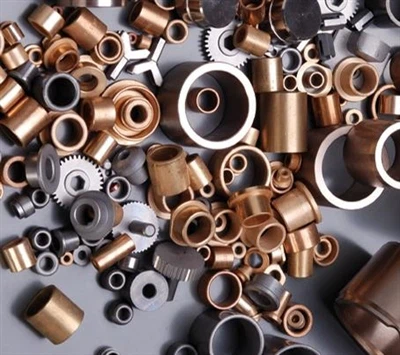
Table of Contents
1. Understanding Bushings and Bearings
2. What are the functional differences between them
3. How they affect mechanical systems
4. Their practical applications and implications
5. Description of bearing types
6. Definition of ball bearings
7. Definition of roller bearings
8. Definition of thrust bearings
9. What are the types of bushings
10. What are solid bushings
11. What are fluid-filled bushings
12. What are the advantages of different types
13. How to evaluate the service life of components
14. Installation and maintenance of bushings and bearings
15. General installation guidelines
16. Bearing installation steps and precautions
17. What are the bushing installation procedures
(1.) Small component installation (light applications)
(2. Medium component installation (medium applications)
(3.) Large component installation (heavy applications)
18. Conclusion
Understanding Bushings and Bearings


In mechanical engineering, bushings and bearings are extremely important and have different functions. Bushings are mostly sleeve-shaped, with solid and fluid-filled structures. They are mainly used to support shafts in linear or swinging motion to reduce friction. They mostly bear radial loads and are used in automobile suspension, steering and simple industrial equipment. They can maintain basic stability in non-high-precision systems, but due to the high friction coefficient, there is energy loss in high-speed or high-efficiency systems. There are relevant industry standards and high-performance composite materials are being used to improve performance and intelligent design trends are emerging. Bearings mainly support rotating shafts. Common structures include rolling bearings (including inner and outer rings, rolling elements and cages) and sliding bearings. They can handle radial and axial loads at the same time and different types have different focuses. They play a key role in automobile wheels, engine crankshafts, large machine tools, motors and other equipment. Their precision has a great impact on high-precision rotating equipment. The low friction coefficient is conducive to reducing energy consumption and improving efficiency. There are also industry standards and specifications. In terms of materials and design, there are also technical trends such as the application of high-performance composite materials and the rise of intelligent design.
What are the functional differences between them
Motion support
Bushing:
The focus is on providing support for linear motion of the shaft (such as a shaft sliding on a linear track) or oscillating motion (such as a shaft that can rotate back and forth in a small range).
Bearing:
It is mainly used to ensure the stable rotation of the rotating shaft.
For example, in an electric motor, the rotor shaft needs to rotate continuously and stably around the central axis, and the bearing plays a key supporting role here to ensure that the motor can work properly.
Load handling capacity
Bushing:
Mainly bear radial loads. Radial load is a force perpendicular to the axis of the shaft. In simple mechanical connection scenarios, bushings can effectively disperse this force to prevent the shaft and surrounding components from being severely worn due to excessive force.
Bearing:
It can handle radial loads and axial loads at the same time. Axial load is a force parallel to the axis of the shaft. And different types of bearings have their own focus on the ability to bear these two loads. For example, radial bearings are better at bearing radial loads, while the main function of thrust bearings is to bear axial loads
How they affect mechanical systems
Differences in support of motion modes
Bushing: Supports linear or swinging motion of the shaft, such as the car suspension control arm connected to the frame through the bushing to achieve up and down swing and translation, relying on the relative sliding or swinging of the shaft and the bushing to reduce friction.
Bearing: The core is to support the rotation of the rotating shaft, such as the motor rotor shaft rotates smoothly around the central axis in the stator with the help of the bearing, and its internal structure is adapted to rotation to reduce friction.
Differences in load handling capacity
Bushing: Mainly bears radial loads, such as the bushings in the hinges of doors and windows disperse the radial force of the hinge shaft to prevent wear, but are not good at handling axial loads.
Bearing: Can handle radial and axial loads at the same time, radial bearings focus on bearing radial forces, such as supporting the gear shaft to prevent bending in the gear transmission system; thrust bearings mainly bear axial forces and stabilize the shaft positioning in the vertical shaft system.
System accuracy and stability
Bushing:
In mechanical systems that do not require very high accuracy, bushings can provide sufficient stability for the system. It can make the axis smoother when performing linear or oscillating motion, and avoid sudden jamming during movement. In this way, the bushing ensures that the mechanical system can operate normally and stably.
Bearing:
For those rotating equipment with high accuracy requirements, the accuracy of the bearing plays a vital role because it directly affects the accuracy of the entire mechanical system. For example, in the spindle system of machine tools, high-precision bearings can accurately determine the position of the tool, thereby ensuring that the cutting work can achieve high processing accuracy.
System efficiency and energy consumption
Bushing:
The working mode of the bushing is mainly sliding friction, or sliding under fluid lubrication. This working mode results in a relatively high friction coefficient of the bushing. In some mechanical systems that require high-speed movement or high energy efficiency requirements, the bushing may consume more energy due to friction.
Bearing:
Especially rolling bearings, it reduces friction by rolling the rolling body. This rolling mode makes the bearing friction coefficient relatively low. In rotating mechanical systems, a lower friction coefficient enables bearings to effectively reduce energy loss, thereby improving the operating efficiency of the entire mechanical system.
Their practical applications and implications
Automotive industry
Bushings: used for suspension, steering and connecting rod connections. Control arm bushings cushion shock and improve comfort, and steering tie rod bushings ensure precise and smooth steering.
Bearings: support rotating parts such as wheel hubs, crankshafts, and transmission shafts. Wheel hub bearings stabilize wheel rotation, crankshaft bearings help engine operation, and transmission shaft bearings facilitate precise shifting.
Industrial machinery manufacturing
Bushings:used to connect the moving parts of transmission and stamping equipment. Reduce friction and wear of transmission equipment, stabilize the movement of stamping equipment parts, and reduce noise.
Bearings: are the core of machine tools, motors, fans, etc. Machine tool bearings ensure tool accuracy, motor bearings stabilize rotors and improve efficiency, and fan bearings help impellers run stably and reduce energy consumption.
Definition of ball bearings
Ball Bearings
Structure:Contains inner ring, outer ring, ball and cage, the ball is placed in the inner and outer ring raceways, and the cage separates the ball.
Features: Low friction coefficient, due to point contact, can bear radial and axial loads, compact structure, suitable for high speed, small space equipment, reduce energy consumption and heat.
Application: Used in computer hard disk spindle motors, small power tools and household appliances (such as razors, fan motors).
Roller Bearings
Structure: Cylindrical or conical rollers replace balls, and are in line contact with the inner and outer rings.
Features: Strong radial load, cylinder focuses on radial force, cone has both radial and axial load, and the friction coefficient is slightly higher.
Application: Cylindrical type is used for heavy machinery transmission shafts and rolling mill rollers; conical type is used for automobile wheel hubs and railway vehicle axle boxes.
Thrust Bearings
Structure: There are ball and roller thrust bearings, which transmit axial force through washers and balls or rollers.
Features:Strong axial load, ball type is suitable for medium axial load and high speed, roller type is suitable for huge axial force.
Application: Ball type is used for axial positioning of centrifugal pumps; roller type is used for large turbines and ship propeller shaft systems.
Definition of roller bearings
Ball bearing
Structure and composition: It consists of an inner ring, an outer ring, a ball and a cage. The inner ring is sleeved with the shaft, the outer ring is fixed, the ball rolls on the inner and outer ring raceways, and the cage separates the ball to prevent collision and ensure stable operation.
Features and advantages: Low friction coefficient, because the ball contacts the inner and outer rings. It can bear radial and axial loads and position the shaft. The structure is compact and suitable for precision and small equipment. Low energy consumption and less heat when rotating at high speed, which is beneficial to extend life and improve efficiency.
Typical application: Used in the spindle motor of computer hard disk drive to ensure the high-speed and stable rotation of the disk to facilitate data reading and writing. In small power tools and household appliances (such as vacuum cleaners and air conditioner outdoor fan motors), its structural and performance advantages support the rotating shaft to ensure efficient and reliable operation of the equipment.
Definition of thrust bearings
Roller Bearings
Structure and composition: Cylindrical or conical rollers replace balls, placed between the inner and outer rings to form line contact, with unique load-bearing advantages.
Feature advantages: Strong radial load-bearing, cylindrical type focuses on radial force, because line contact can effectively disperse; conical type has both radial and axial load-bearing, which can ensure the stability of the shaft system under complex forces. However, the friction coefficient is slightly higher than that of ball bearings.
Typical applications: Cylindrical type is used for heavy machinery transmission shafts and rolling mill rollers to meet large radial force requirements; conical type is used for automobile wheel hubs and railway vehicle axle boxes to adapt to the radial and axial load conditions of the shaft.
What are the types of bushings
Structure and composition: Designed specifically to bear axial loads, there are ball thrust bearings (force is transmitted through balls between thrust washers) and roller thrust bearings (force is carried by cylindrical or tapered rollers), which can disperse axial forces and withstand large pressures.
Features and advantages: Strong axial load-bearing capacity, ball type is moderate for medium axial loads and high speeds, roller type is better at bearing huge axial forces, and can operate stably under high-demand working conditions.
Typical applications: Ball thrust bearings are used for axial positioning of centrifugal pumps to ensure stability; roller thrust bearings are used for large turbines and ship propeller shaft systems to bear huge axial thrusts to ensure the safety and stability of the equipment.
What are solid bushings
Solid bushing
Structure: solid sleeve, mostly made of bronze, brass and other metals, with smooth surface.
Performance: good radial load, prevent friction between shaft and surrounding parts, no additional lubrication, easy to wear at high speed and high load.
Application: machinery with low requirements for precision, load and speed, such as the connection between hand drill handle and drill shaft.
Fluid-filled bushing
Structure: oil or grease, metal or high-strength plastic shell, sealed and leak-proof.
Performance: excellent lubrication, reduced friction coefficient, shock absorption and buffering, adapt to multiple loads and speeds, stable at high speed and high load.
Application: automotive suspension, steering system (such as control arm bushing) and industrial equipment shaft connection, improve comfort, stability and life.
What are fluid-filled bushings
Structural features: solid sleeve, mostly made of bronze, brass and other metal materials, simple interior without cavity, smooth inner surface to reduce friction.
Performance: suitable for small radial load, can isolate the shaft and surrounding parts to prevent friction and collision and act as a buffer. However, there is no lubrication mechanism, the friction coefficient is large at high speed or high load, and it is easy to wear and affect the life and system performance.
Application areas:used for mechanical equipment with low requirements for precision, load and speed, such as the connection between the handle and the drill shaft of a hand drill, to provide support and reduce drag, and facilitate operation.
What are the advantages of different types
Structural features: Contains oil or grease, the outer shell is metal or high-strength plastic and has a sealing structure to prevent leakage. When the shaft moves, the internal lubricant forms an oil film to reduce friction.
Performance characteristics: Excellent lubrication, greatly reducing the friction coefficient, with shock absorption and buffering capabilities, can adapt to a variety of loads and speeds, and can still work stably under high speed and high load.
Application scenarios: Automobile suspension and steering systems (such as control arm bushings) buffer road vibrations to improve comfort and stability; industrial equipment rotating shaft or swing shaft connection, reduce component wear and extend life.
How to evaluate the service life of components
Ball bearings
High precision and low friction: point contact reduces friction, which is beneficial for high-speed equipment to reduce energy consumption and control precision.
Compact fit:tight structure, suitable for small equipment, ensuring shaft support and operation.
Comprehensive load: can bear radial and axial loads, suitable for medium load scenarios.
Roller bearings
High radial load: cylindrical line contact, good at bearing radial force, used for heavy-loaded shafts.
Adaptation to complex loads:conical type has both radial and axial loads, used for complex load-bearing places such as automobile wheels.
Thrust bearings
Strong axial load: specially designed for axial loads, ball type stabilizes centrifugal pump shafts, and roller type bears huge axial forces of large equipment.
Solid bushings
Simple support: simple structure, made of wear-resistant metal, provides support and friction prevention for low-speed and low-load shafts.
Cost-effectiveness: low manufacturing cost, suitable for cost-sensitive machinery.
Fluid-filled bushings
Excellent shock absorption and lubrication: lubricating fluid reduces friction, absorbs shock, and improves automobile comfort.
Working condition adaptation: suitable for a variety of loads and speeds, reducing wear on industrial equipment components.

Installation and maintenance of bushings and bearings
Ball bearings
Influencing factors:
Load: Over-rated loads increase the contact stress between the ball and the inner and outer rings, and the wear increases dramatically.
Speed: High-speed rotation causes more friction heat, frequent collisions between the ball and the cage, and overheating failure is easy without lubrication and cooling, such as high-speed motor applications.
Lubrication: Good lubrication reduces friction and wear, while insufficient or contaminated lubrication coefficients, wear and heat increase. Contaminants damage the lubricating film in harsh environments.
Evaluation method: Based on parameters such as rated dynamic load, actual working load and speed, a specific formula is used to calculate the basic rated life (L10 = (C/P)^p * 10^6 / 60n).
Roller bearings
Influencing factors:
Radial load: Under high radial loads, cylindrical roller bearings have high linear contact pressure between the rollers and the inner and outer rings, and exceeding the design limit causes plastic deformation and failure of the rollers.
Axial load: Tapered roller bearings are affected by axial loads. Improper loads cause roller skew, uneven contact, and increased local wear.
Environment: High temperature reduces the performance of bearing materials and grease viscosity, moisture causes rust, and damages strength and wear resistance.
Evaluation method: There is a basic rated life concept, which is calculated using the corresponding formula based on factors such as roller shape and size. Due to the structure and load characteristics, the calculation and application of parameters such as rated dynamic load are different.
Thrust bearing
Influencing factors:
Axial load:Axial thrust exceeding the design load capacity causes excessive deformation and wear of the ball or roller, such as large turbines and other equipment.
Speed: Unstable speed causes axial force fluctuations, changes the movement state of the ball or roller, and increases the risk of wear and fatigue.
Lubrication and cooling: High axial load generates a lot of heat, and poor lubrication and cooling can easily cause components to overheat and damage.
Evaluation method: Based on the basic rated life calculation, the axial rated dynamic load, actual working load and speed and other parameters are emphasized, and the expected life is evaluated according to the formula combined with actual conditions.
Solid bushing
Influencing factors:
Load movement: Large radial load or swing, frequent start-stop movement, resulting in increased wear, such as when the manual tool shaft connection is frequently used.
Material surface: Material hardness, wear resistance and corrosion resistance affect life. Hard materials are wear-resistant but may damage the shaft. The rough inner surface increases friction and reduces life.
Evaluation method: There is no unified formula for calculating rated life. It is estimated based on application scenarios, load conditions, material properties and empirical data. Wear is measured regularly and the remaining life is estimated based on load and movement time.
Fluid-filled bushings
Influencing factors:
Lubricant: Performance changes with use and working conditions. Wear or contamination of anti-wear additives increases friction and wear. Viscosity reduction at high temperatures affects oil film formation.
Seal: Seal failure causes lubricant leakage, loss of lubrication and shock absorption performance, and external contaminants enter the bushing and shaft.
Evaluation method: Consider the lubricant replacement cycle and seal reliability for comprehensive judgment. According to the lubricant supplier data and the expected life of the seal, check the lubricant status and seal integrity regularly.
Installation and maintenance of bushings and bearings
1. Installation
(I) Bearing installation
Before installation, the work area, bearings and mating parts need to be cleaned. New bearings can be cleaned with solvents and blown dry. The matching accuracy with the shaft and seat should be selected according to the bearing type, load, temperature, etc. to avoid being too loose or too tight. Small bearings can be installed cold, and tools can be used to evenly press the inner or outer ring for press-fitting; large or large interference bearings can be installed hot, and the inner ring of the bearing is heated and quickly installed on the shaft and the temperature is controlled. After installation, check the rotation flexibility and axial and radial clearances.
(II) Bushing installation
Before installation, ensure that the environment and parts are clean, check the seal of fluid-filled bushings, and check the surface of solid bushings. The bushing should be properly matched with the shaft and mounting hole, considering factors such as material, load, and movement mode. Most bushings are installed by press-fitting to ensure that the axis coincides. Long bushings can be pressed in steps; in special cases, the bushing can be frozen or the mounting hole can be heated for installation. After installation, check the installation position, shaft bushing clearance and fluid-filled bushing sealing.
II. Maintenance
(I) Bearing maintenance
Lubrication is the key. Select lubricants and cycles according to the bearing conditions. Special working conditions require more frequent lubrication. Clean the bearings and surrounding environment regularly to prevent impurities from entering. Clean impurities in time. Listen to the sound during operation and use equipment to measure vibration to determine the status. Set up temperature monitoring and alarm. Stop the machine for inspection or adjust the load when abnormal.
(II) Bushing maintenance
Check the lubricant status of the fluid-filled bushing. If the color becomes darker or the viscosity decreases, it needs to be replaced to ensure that the seal is intact. Pay more attention to equipment with large vibration. Both solid and fluid-filled bushings should be checked for wear regularly. If it exceeds the range, replace the bushing or repair the shaft. The sealing performance of the fluid-filled bushing should also be checked. It can be judged by observing the seepage and checking the seal. High-temperature resistant sealing materials should be selected for high-temperature environments.
General installation guidelines
Before installing the bushing and bearing, clean the work area and tools, check the appearance and specifications of the parts, and prepare the installation materials. During installation, accurately position and align, apply appropriate installation force according to the method, and properly install the seals of the fluid-filled bushing. After installation, check the flexibility by manual rotation, measure the gap with tools, and observe whether the fluid-filled bushing has leakage to check the sealing performance. If it does not meet the requirements, adjust or replace the parts.
Bearing installation steps and precautions
1. Installation steps
Cleaning: Clean the installation site and tools. Wash the new bearing with a detergent and blow it dry to remove impurities.
Inspect components: Check the dimensional accuracy of the shaft and the bearing seat, and repair the defects to ensure the matching accuracy.
Selection method: Select cold, hot installation or separable bearing sub-component installation according to the bearing situation.
Cold installation: Place the bearing in the corresponding position, use a suitable sleeve to evenly press the inner or outer ring to press and install, and ensure that the axis coincides.
Hot installation: Use a heating device to heat the bearing as required, and quickly install it on the shaft after uniform heating. Do not apply external force during cooling.
Preliminary inspection: Manually turn the bearing to check whether the rotation and clearance are normal.
2. Precautions
Prevention of damage: Avoid large impact forces during installation, and ensure that the tool contact points and pressure are correct.
Temperature control: Strictly control the temperature during hot installation, and use measuring equipment to monitor to prevent material performance changes and installation problems.
Accuracy: Ensure that the bearing coincides with the shaft axis and the reference relationship with the equipment, and use measuring tools to check and adjust.
Direction: Bearings with direction requirements are correctly installed according to the design and markings to prevent misinstallation and damage to bearings and equipment


What are the bushing installation procedures
1. Installation of small components (light applications)
(1) Cleaning preparation: clean the area and tools, check the appearance of small bushings and the seal of fluid-filled bushings to ensure that they are free of dirt and damage.
(2) Matching treatment: measure the outer diameter of the shaft and the inner diameter of the hole, match the bushing tolerance, and polish the shaft or hole burrs to improve smoothness.
(3) Installation operation: manually insert the bushing into the hole after it is aligned with the hole, and press it in with a small press or a hand hammer (with cork pad), keep the axis straight, and position the bushing with a positioning structure accurately. After installation, measure the end face distance to determine whether it is in place.
2. Installation of medium-sized components (medium-sized applications)
(1) Cleaning inspection: clean the area and tools, check the geometric accuracy and hardness of medium-sized bushings, and check the lubricant volume and seal of fluid-filled bushings.
(2) Matching control: accurately measure the shaft hole size and select the tolerance, clean and lubricate before installation, and freeze or heat the bushing when the interference is large and control the temperature.
(3) Process monitoring: Press slowly and evenly when the press is pressed in, use a dial indicator to measure the deviation between the installation position and the axis, check for foreign objects or skewness when encountering resistance, and check radial runout and axial movement after installation.
3. Installation of large components (heavy-duty applications)
(1) Preparation: Operate in an optimal site, prepare and inspect large equipment, check the quality of large bushings (including internal structure and flaw detection), and accurately measure and trim the shaft hole.
(2) Installation process: Use a crane to move the bushing, monitor alignment with multiple instruments, heat the installation hole and control the temperature when the interference is large, quickly install and press it into place after heating, and pay attention to the progress status throughout the process.
(3) Inspection and debugging: After installation, use professional tools to check various accuracy indicators and fluid-filled bushing seals (pressure testable), check and replenish lubrication before trial operation, monitor temperature and vibration during the process and optimize, and ensure stable operation.
Conclusion
Bushings and bearings are crucial in mechanical engineering. Ball bearings are high-precision and low-friction, suitable for high-precision and high-speed equipment; roller bearings have strong radial load and adapt to complex loads, and are used in heavy machinery and automobile hubs; thrust bearings are specially designed to bear axial loads to ensure axial stability of centrifugal pumps, etc. Solid bushings are simple in structure and cost-effective, and are used in low-precision and low-load devices; fluid-filled bushings have excellent shock absorption and lubrication, good adaptability to working conditions, and are used for automotive and industrial equipment shaft connections.
Correct installation and maintenance are the key to its stable operation and performance. During installation, from area cleaning, component inspection, material preparation, to precise alignment, reasonable force, proper installation of seals, to comprehensive inspection of rotation, clearance and sealing performance, etc., all must be strictly followed. In terms of maintenance, regular lubrication, cleaning and removal of impurities, and checking of operating status and temperature can promptly deal with potential problems and extend component life.
In short, being familiar with the types and characteristics of bushings and bearings, and mastering installation and maintenance methods are extremely critical to improving the performance, reliability and life of mechanical equipment, and are conducive to promoting efficient, stable and sustainable development of mechanical engineering.