

Powder Metallurgy Parts refers to parts manufactured by powder metallurgy process, which is to make metal powder or a mixture of metal and non-metal powder into parts with specific shapes and properties through processes such as pressing and sintering.
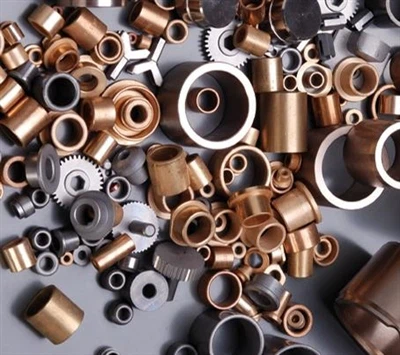
Table of contents
1. Overview of powder metallurgy parts and basic application areas
2.Characteristics of metal and non-metal powders
3.Process expansion and intelligent cutting-edge trends
4.Important operating points and taboos for controlling key points of use
5. Problem solving strategies
6.Maintenance strategies and techniques
7. Conclusion
Overview of powder metallurgy parts and basic application areas
Powder metallurgy parts are made by pressing and sintering metal or metal-nonmetal powder mixtures.
Basic application areas:
1. Automotive: used for engine parts such as gears, cams and rods. Complex shapes with good properties improve performance and fuel efficiency.
2. Electronics: manufacturing heat sinks and connectors. Its good thermal and electrical conductivity are suitable for heat dissipation and reliable connection.
3. Aerospace: production of turbine blades and structural components. Lightweight but strong and heat-resistant, it is essential for weight reduction and extreme condition performance.
4. Medical: implants and instruments can be manufactured. Biocompatible alloys and shape customization are useful.
5. Consumer products: present in power tools and appliances. Economically and efficiently producing small, complex parts with good mechanical properties is an advantage.
Characteristics of metal and non-metal powders
Characteristics of metal powders
1. Physical properties: good electrical and thermal conductivity, most of them have high density, such as iron powder can be used for counterweight parts. Strong machinability, aluminum powder is soft and easy to press into complex shape parts.
2. Chemical properties: chemically active, magnesium powder is active and easy to oxidize, and needs to be protected from oxidation during processing.
Corrosion resistance varies from metal to metal, stainless steel powder is corrosion-resistant and suitable for parts in humid and corrosive environments.
Characteristics of non-metallic powders
1. Physical properties: low density, easy to store and transport. Some have high hardness and wear resistance, silicon carbide powder can improve the wear resistance of parts. Some have thermal insulation and insulation, and silicon dioxide powder can be used to make thermal insulation and insulation parts.
2. Chemical properties: good chemical stability, carbon powder is stable at room temperature, and material properties can be adjusted.
Some can react with metals to form special compounds, and the high-temperature reaction products of boron powder and titanium powder can be used for high-temperature and wear-resistant parts.
Process expansion and intelligent cutting-edge trends
1. Process expansion: This means finding new ways to improve and diversify the manufacturing process of Forklift Bearing Parts This may involve exploring different material combinations, optimizing pressing and sintering techniques, or developing new post-processing steps to improve the quality and performance of parts.
2. Smart trend: This refers to the incorporation of smart technology into powder metallurgy. It may include the use of sensors and data analysis to monitor the production process in real time, ensuring better quality control. In addition, artificial intelligence can be used to predict the properties of the final part based on the input materials and process conditions, helping to optimize the manufacturing process and reduce waste.
Important operating points and taboos for controlling key points of use
Important operating points:
1. Powder preparation: Ensure that the metal and non-metal powders are of appropriate and pure particle size. Uniform particle size helps to stabilize the pressing and sintering effect.
2. Pressing process: The pressure should be moderate. Low pressure will result in insufficient density and poor performance. High pressure may cause cracks or deformation. It needs to be adjusted according to the powder type and part shape. At the same time, the mold should be aligned to prevent part asymmetry.
3. Sintering conditions: Precisely control the sintering temperature, time and atmosphere. The temperature needs to match the powder composition to ensure good particle bonding. The time should be long enough to make the parts dense but not too long to avoid over-sintering and grain growth. Inert or reducing atmosphere is often required to prevent powder oxidation.
Taboo:
1. Avoid contamination: There should be no impurities in the powder and the manufacturing environment. Impurities will interfere with sintering and cause defects in parts.
2. Do not skip quality inspection: Never skip the intermediate and final quality inspection. If cracks, pores or dimensional deviations are not found in the early stage, a large number of defective products will be produced. The density, hardness and microstructure of sintered parts should be tested frequently.
3. Prevent improper operation: Do not treat parts roughly during and after production, especially those with delicate structures or complex shapes. Use appropriate equipment and processes to ensure the integrity of the parts.
Problem solving strategies
Common defects and solutions:
1. Porosity problem: If the sintered parts have pores, it may be due to insufficient pressing pressure or improper sintering conditions. Appropriately increasing the pressure and optimizing the temperature and time can improve the situation. For example, when the porosity is 10% and the strength is low, increasing the pressure by 10-20% and adjusting the temperature to 50-100°C can improve the density and strength.
2. Crack problem: Heating or cooling too quickly during sintering will cause cracks, which can be solved by using a slow rate. If a batch of parts has cracks after sintering, reducing the heating rate from 10°C/minute to 5°C/minute and the cooling rate from 20°C/minute to 10°C/minute can prevent them.
3. Dimension deviation problem: Die wear or improper powder flow during pressing can cause inaccurate dimensions. Regularly check and replace worn dies, and use vibration and other technologies to ensure normal powder flow. If the parts are continuously small due to die wear, replace them with new dies of the correct size.
Quality Control and Monitoring:
1. Process Monitoring: Use sensors to monitor key parameters such as temperature, pressure, powder density, etc. during manufacturing.
2. Statistical Process Control: Use statistical methods to analyze production data and identify defect-causing trends or changes. Collect part size and performance data to detect patterns early and take corrective measures.
Maintenance strategies and techniques
1. Surface protection:
Coating application: Apply paint, zinc or chrome plating, ceramic coating and other protective layers on the surface of Bronze Sleeve Bushing to isolate the environment and reduce corrosion and wear.
Sealing treatment: Use sealants such as resins or special polymers to fill the pores on the surface of parts to prevent liquid and gas contact. In chemical filters, it can prevent impurities from passing through the pores.
2. Regular inspection and cleaning:
Appearance inspection: Regularly check whether the parts have signs of damage such as cracks, gaps or surface discoloration. If abnormalities are found, they can be investigated in depth and corrective measures can be taken.
3. Cleaning method: Use compressed air, ultrasonic cleaning or mild detergent solution to remove dirt, debris and contaminants on the surface of parts.
3. Preventive measures:
●Proper storage: Store parts in a clean, dry and controlled environment, avoid extreme temperatures, humidity and corrosive substances, and use suitable containers or racks to prevent physical damage during storage.
●Load limit: Ensure that the parts are not overloaded during operation. The maximum allowable load must be determined by design and calculation and follow the operating procedures. For example, the maximum torque and force of the powder metallurgy shaft must be strictly controlled in mechanical applications.
Conclusion
In summary, Carbon Graphit Bushing Bearing are of great significance in various industries. Their production process can produce complex parts with specific properties.
They are widely used and can be applied in automotive (to improve performance and fuel efficiency), electronics (to ensure reliability), aerospace (to meet strength and weight needs), medical (biocompatibility and customized shapes) and consumer goods (small parts are cost-effective).
Powder characteristics determine part properties. Controlling manufacturing steps and avoiding problems such as contamination are essential for quality.
Defect strategies and quality control and monitoring maintain production integrity. Maintenance aspects such as surface protection and proper storage are essential for long-term performance.
As technology advances, powder metallurgy will continue to develop, with the potential for expansion and intelligent integration to improve performance and expand the range of applications, becoming increasingly important in modern manufacturing.