

When you hear the word "bushing bearing," you might think of a simple mechanical component, but they play a vital role in modern engineering. Whether in car engines, industrial equipment, or household appliances, plain bearings quietly support the efficient operation of mechanical systems in an unobtrusive position. So, what exactly is a bushing bearing? How does it work? In this article, we will uncover the working principle of this classic mechanical element and why it has always been a place in various applications. Are you ready to explore this key component that makes modern machinery run smoothly? Let's get started!
Content
3. Types and Material Selection
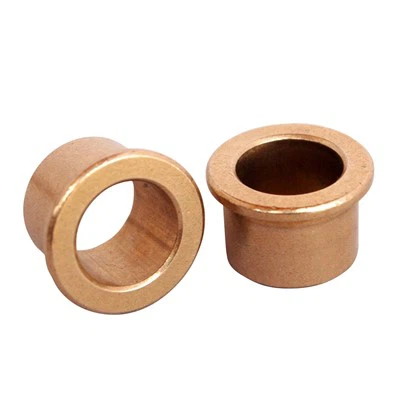
Bushing bearing is a mechanical component used to reduce friction and wear between shafts and supporting structures. It is usually made of metal, plastic or composite materials, and is mostly in the shape of a cylinder or ring structure with a through hole. It is installed in a mechanical system to support a rotating or sliding shaft. Its core function is to effectively reduce friction and wear by forming a low-friction contact surface between the shaft and the supporting structure, allowing the shaft to rotate or slide freely, thereby preventing excessive heat accumulation or energy waste. This design not only ensures smooth movement of the shaft, but also extends the service life of mechanical equipment.
Bushing bearings are important and necessary in many fields, especially in mechanical systems with high loads and high speeds. It is widely used in industries such as automobiles, industrial pumps, and aerospace. In automotive engines and transmissions, bushing bearings help reduce friction between components and improve vehicle operating efficiency; in industrial pumps, it ensures smooth operation of the pump shaft and reduces energy consumption; and in the aerospace field, bushing bearings can withstand extreme working conditions and ensure precise motion control. Therefore, bushing bearings are not only crucial in improving the performance of mechanical systems, but also have an indispensable impact on the reliability and life of equipment.
The working principle of bearing bushings mainly relies on their ability to provide a low-friction contact surface to support the free rotation or sliding of the shaft in the mechanical system. Its basic working principle can be explained by the following key steps:
- Friction separation: Bearing bushings reduce the area of direct contact between the shaft and the supporting structure by creating a gap between the two, reducing friction. Bushing materials usually have a low coefficient of friction, which can effectively reduce the generation of frictional heat and maintain the smooth movement of the shaft. This gap and the lubricating film on the bushing surface work together to further reduce friction.
- Load distribution: Bushing bearings not only bear the load of the shaft, but also help to evenly distribute the load between the shaft and the supporting structure. As the shaft slides or rotates in the bushing, the bushing material evenly distributes the load by deformation or surface lubrication, thereby avoiding local wear caused by concentrated loads.
- Free movement of the shaft: During operation, bushing bearings allow the shaft to rotate or slide freely in them, which can achieve precise motion control. Bushings reduce friction and reduce shaft resistance, allowing shafts in mechanical systems to operate smoothly and maintain low energy losses.
- Lubrication: Many bearing bushings are designed with lubrication in mind, and some bushings are designed to be self-lubricating, such as bushings with lubrication holes or special coatings. Lubricating oil or grease can form a lubricating film between the bushing and the shaft, effectively reducing direct contact friction and extending the service life of the bushing and shaft.
In general, bearing bushings ensure stable operation of shafts in mechanical systems by reducing friction, dispersing loads, providing free movement and lubrication, and avoiding performance degradation or failures caused by friction and wear.
3. Types and Material Selection
Bearing bushings can be divided into many types according to different application requirements, and the materials used in each type have different performance characteristics. Understanding its classification and material selection can help us better match the appropriate bushing to improve the operating efficiency and durability of the mechanical system. The following will be classified for you from two perspectives:
Common types
Plain Bushing: Plain bushings are the most basic type of bearing bushings, usually relying on external lubricants (such as lubricating oil or grease) to reduce friction. This type of bushing has a simple design and is suitable for applications with small loads and moderate speeds. Through external lubrication, the plain bushing can maintain a low friction coefficient during operation and extend its service life. Common application scenarios include low-speed mechanical equipment, household appliances, and some industrial equipment.
Self-lubricating Bushing: Self-lubricating bushings use materials containing solid lubricants, such as PTFE (polytetrafluoroethylene) or bronze-based composites, which can reduce friction without external lubrication. This type of bushing is suitable for environments where regular lubrication cannot be provided or where lubricants are required. Self-lubricating bushings are widely used in high-temperature, high-speed or harsh environments, such as automobile engines, ship machinery, or some aerospace equipment.
Bimetal Bushing: Bimetal bushings consist of a steel backing and a copper alloy inner layer, combining the high strength of steel with the excellent wear resistance of copper alloy. Bushings of this structure can withstand large loads and high temperature environments, and are widely used in heavy machinery and equipment, automotive engines, and industrial pumps, and are particularly suitable for high impact and heavy load conditions.


Material Comparison
When selecting materials for bearing bushings, the performance characteristics and applicable scenarios of common materials are different:
Bronze: Bronze bushings are suitable for high load and high temperature environments due to their excellent wear resistance and self-lubricating properties, and can withstand high pressure. It is particularly suitable for use in demanding mechanical systems, such as high-temperature engine components, marine equipment, and some large industrial machinery. Bronze materials have good corrosion resistance, but their prices may be higher than other materials.
Steel-PTFE Composites: Steel-PTFE composite bushings combine the high strength of steel with the low friction performance of PTFE, and are often used in applications that require high strength while also requiring low friction. Because PTFE can provide excellent lubrication, this material is suitable for high-load, low-speed or medium-speed working conditions. Commonly found in agricultural machinery, automotive transmissions, and some industrial equipment.
Brass: Brass bushings excel in some medium-load and highly corrosive environments due to their high corrosion resistance and good thermal conductivity. Its advantages include good processing performance and high wear resistance, and are suitable for applications with medium loads, high humidity, chemical corrosion or marine environments, such as ships, pump equipment, and some industrial machinery. Brass has good fatigue resistance, but may not be as durable as bronze or bimetallic bushings in environments with high temperatures or very high loads.
In general, the material selection of bearing bushings needs to be considered comprehensively based on multiple factors such as working environment, load, speed, temperature, etc. Each material has its own unique advantages and limitations, so it is important to choose the right bushing material according to the actual application requirements.

Automobile engine
In automobile engines, bearing bushings are mainly used to support the engine's crankshaft, connecting rod and other moving parts. These parts need to operate under high temperature and high speed conditions. Therefore, the core function of the bearing bushing is to reduce friction, prevent excessive wear, and maintain good thermal conductivity. Bronze or bimetallic bushings are usually used, which are not only resistant to high temperatures, but also able to withstand the high loads and impact forces when the engine is working. The wear resistance and good lubrication performance provided by the bronze bushing during engine operation ensure the smooth operation of engine components and extend the service life of the engine.
Industrial pump
In the bearing system of industrial pumps, bearing bushings are used to support the pump shaft and reduce energy loss by reducing friction. The pump shaft usually needs to bear a large load, and at the same time, many pump equipment will work in chemical or corrosive environments. Therefore, the function of the bearing bushing is to effectively disperse the load, reduce the friction between the shaft and the supporting structure, and resist chemical corrosion. Self-lubricating bushings are widely used in such equipment because they can provide long-lasting lubrication without relying on external lubrication and adapt to harsh environments. Such a design not only improves the efficiency of the pump, but also greatly reduces maintenance costs.

Marine machinery
Marine machinery, especially propeller shafts and steering systems, often operate in high-load, high-impact and seawater corrosion environments. In order to maintain the efficient operation of ship systems, bushing bearings need to have high wear resistance and corrosion resistance. Bimetallic bushings are often used in this environment because they can withstand extremely high loads and the corrosion resistance of copper alloy is very suitable for marine environments. The use of such bushings can not only reduce friction, but also effectively prevent mechanical failures caused by seawater corrosion, ensuring the stability and reliability of ships during long-term voyages.
Aerospace equipment
In the aerospace field, equipment must operate stably under harsh conditions such as extreme temperatures, vacuum or pressure changes. The moving parts of spacecraft usually require precision control, so the key function of bearing bushings in this field is to ensure high precision and stability in high temperature environments. Self-lubricating bushings and bimetallic bushings are often used in such high-precision environments. PTFE or composite bushings can provide extremely low friction coefficients and excellent temperature resistance without lubricating oil. This ensures the precise operation of various components of spacecraft in complex environments and reduces the risk of equipment failure.

With the continuous advancement of technology, bushing bearings are also constantly developing to meet new challenges and opportunities. In terms of technological innovation, the introduction of ceramic coated bushings and intelligent wear monitoring technology has opened up new horizons for the performance improvement of bushing bearings. Ceramic coated bushings are becoming the preferred material in high-performance applications due to their excellent wear resistance and high temperature resistance; at the same time, intelligent wear monitoring technology can monitor the working status of bearings in real time, predict failures in advance, and further improve the reliability and maintenance efficiency of equipment.
In addition, environmental protection needs have also promoted the research and development trend of oil-free lubricating materials. With the improvement of environmental protection requirements, oil-free lubricating bushings can reduce the pollution of traditional lubricating oils to the environment and meet the needs of industrial green development, which will become an important direction for the development of bushing bearings in the future.
In short, the irreplaceable nature of bushing bearings in mechanical design will become more prominent with the continuous evolution of technology. From improving wear resistance and high temperature resistance to meeting the needs of environmental protection and intelligent monitoring, the technological innovation of bushing bearings will continue to promote the improvement of mechanical system performance, especially in the fields of high-end manufacturing and precision equipment, bushing bearings will show a broader application prospect.