

At a time when the new materials industry is booming, graphite and carbon graphite, as important branches of carbon-based materials, play a key role in many fields due to their unique physical and chemical properties. However, the concepts and application boundaries of the two are often confused, and "Which is better, graphite or carbon graphite" has become the focus of industry attention. In fact, both materials have their own advantages and disadvantages, and their applicability depends on the specific application scenario.
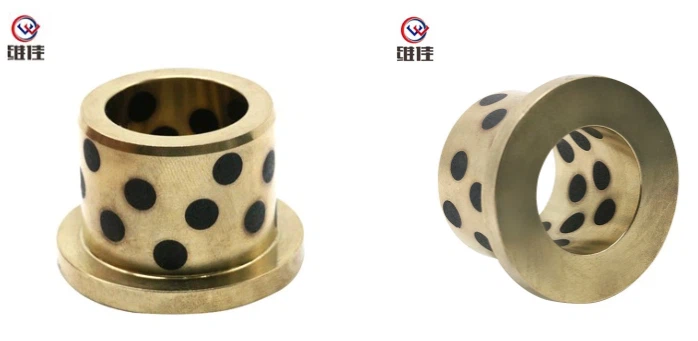
Table of contents
1. Material nature and classification system
2. Comparative analysis of core performance
2.1 Differences in physical properties
2.2 Thermal properties and electrical conductivity
2.3 Chemical stability and mechanical strength
3. Analysis of applicability of application scenarios
3.1 Traditional industrial fields
3.2 High-tech fields
3.3 Differences in cutting-edge applications
4. Market structure and development trends
5. Conclusion
Material nature and classification system
Graphite is a crystalline form of carbon, belonging to natural or artificial hexagonal layered structure materials. Natural graphite is divided into two categories according to the crystal form: crystalline (flake, block) and cryptocrystalline (earth-like), with China and Brazil as the main production areas; artificial graphite is made by high-temperature roasting and graphitization of raw materials such as petroleum coke and asphalt, and is often used in battery negative electrodes, electrodes and other fields.
Carbon graphite is not a single material term. It usually refers to high-performance materials based on carbon, which are composited with graphite and other carbonaceous materials (such as carbon fiber, carbon nanotubes) or non-carbon materials through special processes, including carbon-carbon composites, graphite-based composites, etc. This type of material has achieved breakthroughs in strength, conductivity and other properties through structural optimization, and is widely used in high-precision fields such as aerospace and semiconductors.
Core performance comparison analysis
2.1 Differences in physical properties
In terms of density, the density of natural graphite is about 2.09-2.23g/cm³, and that of artificial graphite can reach 2.1-2.3g/cm³; carbon-graphite composites can be reinforced with a density as low as 1.8g/cm³ (such as carbon-carbon composites), meeting the lightweight requirements of aerospace. In terms of hardness, the Mohs hardness of graphite is only 1-2, and the texture is relatively soft; carbon-graphite composites can be increased to 3-5 by adding reinforcing phases, which is suitable for wear-resistant scenarios such as mechanical seals.
2.2 Thermal and electrical properties
Graphite has excellent high temperature resistance, a melting point of over 3600℃, and a low thermal expansion coefficient (about 1×10⁻⁶/K); on this basis, carbon-graphite composites can increase thermal conductivity to 1500-2000W/(m・K) by optimizing the structure, which is 3-5 times that of ordinary graphite, and has significant advantages in the field of electronic heat dissipation. In terms of electrical conductivity, the electrical conductivity of graphite reaches 10⁴S/m, while the electrical conductivity of carbon-graphite composites can reach 2×10⁵S/m through doping modification, meeting the high electrical conductivity requirements of semiconductor electrodes.
2.3 Chemical stability and mechanical strength
Graphite is chemically stable at room temperature and resistant to acid and alkali corrosion, but it is easily corroded in a strong oxidizing environment; carbon-graphite composites can resist highly corrosive media such as aqua regia and fluorine gas through coating or structural design. In terms of mechanical strength, graphite has a compressive strength of only 30-80MPa, while carbon-carbon composite materials have a compressive strength of 200-300MPa and a flexural strength of over 150MPa, which is suitable for extreme working conditions such as rocket engine throat linings.
For intuitive comparison, the core performance data of the two are summarized in the following table:
| Performance indicators | Graphite | Carbon graphite composite material | Typical application scenarios |
| Density (g/cm³) | 2.09 - 2.3 | 1.8 - 2.2 | Lightweight structures (aerospace) |
| Thermal conductivity (W/(m・K)) | 300 - 600 | 1500 - 2000 | Electronic cooling, nuclear reactors |
| Electrical conductivity (S/m) | 10⁴ | 10⁵ - 2×10⁵ | Semiconductor electrodes, battery materials |
| Compressive strength (MPa) | 30 - 80 | 200 - 300 | High-temperature pressure-bearing components |
| Corrosion resistance | Acid and alkali resistant, not resistant to strong oxidation | Resistant to strong corrosive media | Chemical equipment, marine engineering |
Analysis of the applicability of application scenarios
3.1 Traditional industrial fields
In the metallurgical industry, graphite electrodes occupy 90% of the market share of arc furnace steelmaking electrodes due to their cost advantages (average price of about 12,000 yuan/ton); in scenes with higher strength requirements such as continuous casting crystallizers and high-temperature crucibles, Carbon Graphite Bushing composite materials have become the first choice for high-end products due to their better thermal shock resistance and wear resistance. In the chemical industry, graphite heat exchangers are widely used in conventional acid-base environments due to their low price and easy processing; carbon-graphite sealing rings are used for pump valve sealing in highly corrosive media due to their high corrosion resistance and self-lubrication.
3.2 High-tech fields
In the new energy battery industry, natural graphite dominates the low- and medium-end negative electrode market with low cost (market share 75%), and artificial graphite occupies the high-end power market with high energy density (360mAh/g); carbon-graphite composite materials increase the negative electrode energy density to 500mAh/g through silicon-carbon composite technology, becoming the research and development direction of the next generation of batteries. In semiconductor manufacturing, high-purity graphite is used for wafer fixtures, and carbon-graphite composites are used in key components of ion implantation equipment due to lower impurity precipitation (<0.1ppm).
3.3 Differences in cutting-edge applications
In the aerospace field, carbon-carbon composites are used for rocket engine throat linings and aircraft brake discs with low density and high specific strength (specific strength exceeds 2000MPa・m/kg); while graphite is only used as an auxiliary thermal insulation material. In cutting-edge scenarios such as quantum computing and nuclear fusion, the high conductivity and extreme environmental tolerance of carbon-graphite composites make it a research hotspot for superconducting cables and first wall materials of nuclear fusion devices.
Market structure and development trend
In 2024, the global graphite market will reach 21 billion US dollars, of which natural graphite accounts for 65%, mainly used in refractory materials and battery negative electrodes; the artificial graphite market will grow by 18%, focusing on the new energy field. Although the market size of carbon graphite composite materials is only 4.5 billion US dollars, the annual growth rate exceeds 25%, and the demand in the fields of aerospace (38%) and semiconductors (27%) has surged.
From a regional perspective, China controls 70% of the world's graphite production capacity, but high-end carbon graphite composite materials rely on imports. Japan's Toray and Germany's SGL Group occupy 60% of the world's high value-added market share. In the future, with the expansion of new energy and semiconductor industries, the demand for graphite will continue to grow; carbon graphite composite materials will develop in the direction of lightweight and functionalization with technological breakthroughs, and the two will show differentiated growth trends in their respective tracks.
Graphite and carbon graphite are not in a competitive relationship of "either this or that", but a coordinated development based on complementary performance advantages. Graphite is based on traditional industries and low-end markets with its cost and basic performance, while carbon-graphite composites are exploring high-tech fields with technological innovation. Enterprises need to accurately select material solutions based on the performance requirements, cost budget and technical feasibility of the application scenario. With the continuous breakthroughs in carbon-based material technology, the two will collide with innovative sparks in more emerging fields and jointly promote the upgrading of the global new materials industry.