

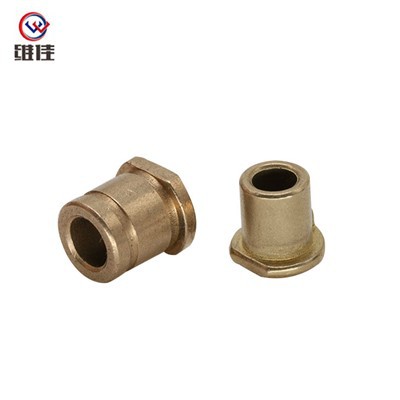
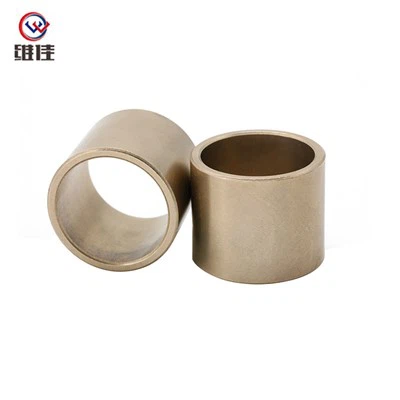
In mechanical equipment, friction is one of the main factors that lead to component wear, energy loss and reduced efficiency. In order to reduce friction, extend service life and improve equipment performance, many mechanical systems use bearing bushings. As a widely used friction pair, bushings not only support and fix the shaft, but also effectively reduce friction. By selecting suitable materials, designing a reasonable structure and optimizing the lubrication system, bushings can form a stable lubricating oil film between the shaft and the bushing, thereby reducing direct contact and friction. This article will explore how bushings can reduce friction through different mechanisms and improve the efficiency and reliability of mechanical equipment.
Content
2. Multi-dimensional implementation mechanism of friction control
3. Technical analysis of typical application scenarios
4. Technical challenges and innovation directions
The strategic position of bushings in mechanical systems is very important. As a core mechanical connector, it not only bears the functions of force transmission, motion guidance and vibration isolation, but also plays a vital role in improving overall mechanical efficiency. Bushings ensure the correct fit between shafts and bushings by providing stable support, so that mechanical parts can operate efficiently and avoid excessive wear. In terms of force transmission, bushings can share the pressure from the load and reduce the impact on other parts; in terms of motion guidance, it ensures the accurate motion trajectory of mechanical parts; in terms of vibration isolation, bushings can effectively absorb and slow down vibrations, protect equipment from excessive vibrations, and thus extend service life.

Friction control is a particularly critical part of the function of bushings. Through reasonable design and material selection, bushings can reduce friction coefficients, reduce energy losses, and thus improve mechanical efficiency. Research data shows that bushings can effectively reduce heat accumulation and wear caused by friction, especially in high-load or high-speed working environments, where the friction control effect of bushings is particularly prominent.
Compared with traditional sliding bearings, bushings have unique advantages in design. Traditional sliding bearings usually rely on a large lubricating oil film to reduce friction, while bushings can provide more stable friction control under different working conditions by optimizing material selection and structural design. The advantages of bushings in bearing high loads, high temperature resistance and vibration prevention have made them replace traditional sliding bearings in many modern mechanical equipment and become an indispensable part of mechanical systems.
2. Multi-dimensional implementation mechanism of friction control
Bearing bushings use a multi-dimensional optimization strategy in friction control. Through the synergy of materials, surface design, structural innovation and intelligent control, friction is minimized, thereby improving the efficiency and stability of the mechanical system.

Friction optimization at the material level
Polymer composites are widely used in bearing bushings, especially materials with self-lubricating properties. Such materials can reduce the friction coefficient by releasing internal lubricants without external lubrication. Taking rubber bushings as an example, their anti-aging design can effectively prevent material aging and hardening, maintain low friction and long service life. In addition, surface texture design also plays an important role. By optimizing the texture and roughness of the bushing surface, the fluid dynamic effect can be used to improve the stability of the lubricating oil film, thereby further reducing friction. Studies have shown that the design of surface texture can effectively change the distribution of the oil film, keep the friction stable under load, and reduce wear.
Friction reduction strategy of structural innovation
The structural design innovation of bearing bushings is also the key to friction control. Elastic deformation is an important strategy in bushing design. By optimizing the bushing material and design, it can be elastically deformed when subjected to external loads, thereby compensating for the morphological differences between the contact surfaces and reducing friction. The force transmission mechanism in the bushing model shows that the elastic deformation of the bushing helps to disperse the local load and avoid excessive concentration, thereby reducing friction. In addition, multi-layer composite structures are also an effective friction reduction strategy. By designing different layers of materials, the bushing can achieve step-by-step energy dissipation in the multi-layer composite structure to avoid excessive friction heat accumulation. Similar friction heat conduction solutions have been verified in many high-load applications, which reduce the increase in friction caused by temperature increase by dissipating heat layer by layer.


Intelligent regulation of dynamic response
Intelligent regulation technology brings new possibilities for bushing friction control. The bearing bushing can automatically adjust its stiffness and friction characteristics according to changes in the working environment. The nonlinear stiffness curve enables the bushing to provide adaptive adjustment under load fluctuations to ensure stability under different working conditions. This design enables the bushing to dynamically adjust its friction coefficient when the load changes to avoid performance fluctuations caused by excessive or too small loads. In addition, the adaptive regulation of bushing performance is also particularly important under temperature and pressure coupling conditions. By real-time monitoring of temperature and pressure changes, the bushing can automatically adjust its shape and friction characteristics according to the change of thermal expansion coefficient, so as to adapt to the working requirements under different working conditions and optimize the overall friction performance.
In summary, the multi-dimensional implementation mechanism of bearing bushing friction control forms a complementary system through material optimization, surface design, structural innovation and intelligent regulation, thereby ensuring effective control of friction and improving the operating efficiency and reliability of mechanical equipment.
3. Technical analysis of typical application scenarios
Automobile suspension system
In automobile suspension systems, bearing bushings play an important role, especially in the design of rear shock absorbers. Through the topological optimization of bushings, the best bushing performance can be achieved in a limited space, further improving the riding quality. In this process, the dimensional parameters of the bushing are closely related to the riding comfort of the vehicle. For example, the hardness, elasticity and shape design of the bushing will directly affect the shock absorption effect and the handling of the vehicle. Through accurate vibration spectrum analysis, the appropriate bushing type can be selected for different working environments and load conditions, optimizing the shock absorption performance of the system and reducing unnecessary vibration. This optimization not only improves ride comfort, but also extends the service life of the suspension system.
Precision transmission device
In precision transmission devices, the selection and stiffness matching of bushings are key, especially in the design of industrial robot joints. To ensure the accuracy and stability of joint movement, the stiffness of the bushing must be accurately matched. With the help of discrete model simulation methods, engineers can simulate and analyze the performance of bushings with different stiffness under different loads and optimize their design to adapt to different load conditions. For some precision transmission devices, such as robot arms, the micron-level positioning accuracy requirements further emphasize the necessity of friction control. To this end, a high-performance friction control solution is adopted to effectively reduce friction by selecting appropriate materials and lubrication methods to ensure stable operation of the system under high precision.


Aerospace field
In the aerospace field, bearing bushings are usually faced with extreme environments such as high temperature and high pressure, so special bushing material design is required to ensure its stability and long-term reliability in harsh environments. Special bushing design must meet strict thermal stability requirements, which are usually based on thermal stability test standards to ensure that the bushing can maintain good mechanical properties and lubrication effects at high temperatures. In a vibrating environment, the dynamic adjustment strategy of the preload is particularly important. In order to prevent the instability of the bushing caused by vibration, the intelligent control technology can adjust the preload in real time according to the working state, optimize the contact state and friction characteristics of the bushing, and thus improve the reliability and durability of aerospace equipment.
Construction machinery system
In construction machinery systems, bearing bushings also bear a lot of pressure, especially in heavy equipment such as excavators and cranes. Construction machinery usually needs to operate under high load and extreme working conditions, so the design of the bushing must have high strength and wear resistance, and high-strength metal composite materials or self-lubricating materials are often used. These materials can effectively reduce friction and wear under high load and long-term operation. In terms of vibration control, construction machinery and equipment often face severe vibrations, and the design of the bushing needs to be able to absorb and alleviate these vibrations. Under extreme temperature difference conditions, the bushing must have good temperature resistance. In summary, the design of bearing bushings in construction machinery should consider high load, vibration control and temperature resistance to ensure the efficient operation of equipment in complex environments.
In summary, the application of bearing bushings in various fields requires refined design and optimization according to specific working conditions. Whether it is vibration control in automotive suspension systems or friction control and stiffness matching in precision transmission devices, the technical analysis of bushings is driving various industries to develop in the direction of efficiency, reliability and intelligence.
4. Technical challenges and innovation directions
Under extreme working conditions, bearing bushings face many challenges, especially in extreme environments such as high and low temperatures, where the friction coefficient of bushing materials may change significantly. Studies have shown that increased temperature will lead to an increase in the friction coefficient, which will intensify wear and affect the working performance of the bushing. In addition, the bushing may undergo creep failure during long-term use, causing its geometric shape to change, which in turn affects its load-bearing capacity and stability. Therefore, developing more accurate fatigue life prediction models and thermal response analysis technologies for friction behavior will be a key research direction in the design of bearing bushings in the future.
The development of smart bushings provides new solutions to these challenges. Embedded sensor technology can monitor the friction state and working environment of the bushing in real time, thereby optimizing bushing performance and timely warning of potential failures. In addition, the introduction of shape memory alloys enables bushings to self-repair under friction and temperature changes, extending service life and improving equipment reliability. These innovative technologies can not only improve the performance of the bushing, but also achieve more intelligent maintenance and management.
In terms of sustainable development, the development of bio-based materials provides bushings with new friction reduction properties and reduces dependence on and impact on the environment. Through friction property testing and material optimization, bio-based materials are expected to reduce energy consumption and pollution without sacrificing performance. In addition, the bushing surface strengthening process in remanufacturing technology also provides an effective way to extend the service life of the bushing and reduce resource waste. Through these innovative directions, the technology of bearing bushings will develop in a more intelligent, environmentally friendly and efficient direction.
The paradigm of friction control technology is undergoing a transformation from passive compensation to active regulation, gradually achieving more accurate and efficient friction management. With the development of intelligent manufacturing 4.0, the strategic value of bushing technology has become increasingly prominent. Through multi-physics field coupling simulation, the design methodology has been profoundly innovated to better cope with complex working conditions and high-precision requirements. In this process, bushings are not just simple friction components, but also a key link in intelligent and systematic design. Through integrated intelligent monitoring, automatic adjustment and optimized design, bushing technology is providing more reliable and sustainable solutions for various industries, driving mechanical equipment towards high efficiency, low friction and intelligent development.