

Bearing bush clearance is a crucial parameter in mechanical engineering and equipment design. It directly affects the smoothness, efficiency and service life of the machine. In various types of rotating machinery and power transmission systems, bearing bushings are used to support rotating bearings, reduce friction, bear loads, and ensure precise fit between components. The size of the bushing clearance has a significant impact on factors such as friction, heat accumulation, and lubrication effect. Too large or too small a clearance may cause excessive wear, overheating or even failure of the equipment. Therefore, understanding and reasonably designing the bearing bushing clearance is crucial to improving the performance and reliability of mechanical equipment. In this article, we will explore in depth the definition, calculation method and impact of bearing bushing clearance on equipment operation to help engineers and technicians better understand and apply this important parameter.
Content
2. Definition and classification of bearing bushing clearance
3. Factors affecting clearance design
4. Clearance measurement and adjustment methods
5. Engineering application and case analysis
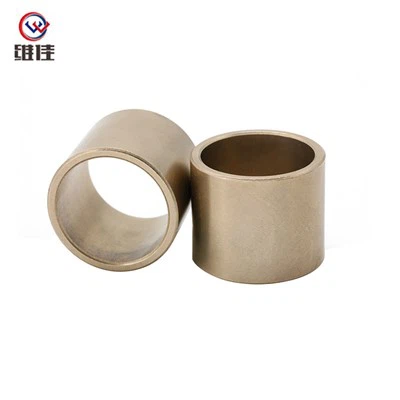
Bearing bushings are an important component widely used in mechanical transmission systems. Their main function is to support the rotating shaft system, reduce friction, carry loads, and ensure precise fit between the shaft and the bearing. Bearing bushings are usually made of wear-resistant materials and can work effectively under high load and low speed conditions. By reducing friction, bearing bushings can not only improve the efficiency of mechanical transmission, but also reduce energy consumption and extend the service life of the equipment. Therefore, bearing bushings play a core role in various types of rotating machinery, internal combustion engines, compressors and other equipment.

When designing and using bearing bushings, the gap between the bushing and the shaft is a crucial factor. The size of the gap directly affects the performance and working state of the bearing bushing, and thus affects the overall operation effect of the equipment. Appropriate bearing bushing gap can optimize the lubrication effect, reduce friction and wear, and ensure efficient and stable operation of the equipment. However, too large or too small a gap will have a negative impact on the working state of the equipment. Too large a gap may cause the lubricating oil film to be unstable, increase friction and wear, and even cause excessive vibration and noise. Too small a gap may lead to insufficient lubrication, overheating between the shaft and the bushing, and thus affect the normal operation of the equipment.
Therefore, precise control of the clearance of the bearing bushing is crucial to the performance of the equipment. Studies have shown that clearance control not only affects the service life of mechanical equipment, but is also closely related to key performances such as vibration characteristics, temperature rise, and fuel consumption. In practical applications, designers need to select appropriate bearing bushing clearance based on factors such as the working conditions, load conditions, and speed of the equipment to ensure the long-term stability and high efficiency of the mechanical equipment. Therefore, the study of bearing bushing clearance is not only of great theoretical significance, but also has wide application value in engineering practice.
2. Definition and classification of bearing bushing clearance
The clearance of the bearing bushing refers to the gap between the bushing and the shaft, which can usually be divided into radial clearance and axial clearance. The size of this clearance directly affects the lubrication effect, load-bearing capacity and operating stability of the equipment.
- Radial clearance: refers to the radial distance between the inner hole of the bushing and the shaft. It is one of the most important geometric parameters of the bearing bushing and determines the load-bearing capacity and lubrication effect of the bushing. The size of the radial clearance directly affects the stability and lubrication effect of the lubricating oil film, thereby affecting the friction and temperature rise. Too large radial clearance may cause the lubricating oil film to be unstable, resulting in increased friction, increased wear and reduced load-bearing capacity; while too small radial clearance may cause insufficient lubrication, causing local overheating or dry friction, leading to equipment failure. Therefore, a reasonable design of radial clearance is crucial to ensure the smooth operation of the equipment and extend its service life.
- Axial clearance: refers to the allowable displacement of the bushing in the axial direction . Axial clearance is mainly used to compensate for factors such as thermal expansion, assembly errors or axial movement of the shaft. During the operation of mechanical equipment, temperature changes may cause thermal expansion of the shaft or relative displacement of components. Appropriate axial clearance can ensure that the equipment will not interfere with or damage components due to thermal expansion or assembly errors under different working conditions.
The clearance of bearing bushings has different design and practical application standards at different stages of use, and can be mainly divided into two types: pre-installation clearance and working clearance.
- Pre-installation clearance (initial clearance): refers to the clearance value calculated according to theoretical design before assembly. The pre-installation clearance is usually larger than the clearance during operation to ensure sufficient lubricating oil film in the initial stage to avoid direct contact between the bushing and the shaft. The design of this clearance takes into account factors such as assembly tolerance, thermal expansion and load, and is usually a conservative design value to provide a safety margin for equipment operation.
- Working clearance (operating clearance): refers to the actual clearance between the bushing and the shaft during the actual operation of the equipment, taking into account factors such as thermal expansion, load deformation and friction heat. As the equipment runs and the temperature rises, the shaft and bushing will undergo thermal expansion, causing the actual clearance to change. Therefore, the working clearance is usually smaller than the initial clearance before installation, which can ensure that the appropriate clearance between the bushing and the shaft is maintained during the operation of the equipment to meet the requirements of load bearing, lubrication and axial positioning.
In general, reasonable control of the size of the bearing bushing clearance is crucial to improving the working efficiency and extending the service life of mechanical equipment. During design, it is necessary to comprehensively consider factors such as working environment, load, speed and thermal expansion to ensure the appropriateness of the bushing clearance to optimize the performance of the equipment.
3. Factors affecting clearance design

The design of the bearing bushing clearance is first affected by the mechanical working conditions. Load characteristics are one of the important factors that determine the size of the clearance. Under high-load conditions, the clearance of the bearing bushing needs to be appropriately reduced to enhance the stability and load-bearing capacity of the equipment, and to avoid excessive clearance causing instability of the lubricating oil film, thereby increasing friction and wear. Under low-load conditions, the clearance can be appropriately increased to reduce friction and reduce energy consumption. In addition, the speed of the equipment and the temperature rise during operation are also key factors. High-speed operation will generate a lot of heat, so enough space needs to be reserved for thermal expansion. If the clearance is too small, it may cause the equipment to get stuck or have excessive friction during operation, affecting the operating stability. Therefore, high-speed equipment is usually designed with a larger clearance to cope with the expansion caused by temperature rise.
In terms of materials and assembly, the clearance design of the bearing bushing also needs to consider the difference in the thermal expansion coefficient of the material. Different materials have different thermal expansion coefficients, which means that they expand differently when the temperature changes. This needs to be specially considered during the design to ensure that the clearance can adapt to the expansion difference of different materials and avoid getting stuck or wearing due to inconsistent thermal expansion. In addition, the installation method of interference fit will also affect the clearance design. During the assembly process, the bushing may be compressed, resulting in a reduction in the initial clearance. Therefore, the initial clearance value needs to be adjusted according to the actual installation situation to ensure that the equipment can maintain a reasonable working clearance during operation.

4. Clearance measurement and adjustment methods
Common bearing bushing clearance measurement methods include push-pull method and torque method. The push-pull method evaluates the clearance range by measuring axial displacement and is suitable for scenarios with positive clearance. In this method, the bushing is pushed or pulled to measure its displacement, thereby calculating the clearance size. This method is simple and intuitive and is suitable for general installation and inspection. However, if the clearance is small or uneven, the accuracy of the push-pull method may be limited. Another commonly used technique is the torque method (Torque-Set), which indirectly evaluates the clearance by analyzing the relationship between the preload and the torque of the bearing bushing. This method can monitor the clearance change without complete disassembly, especially when the clearance is evaluated in real time during operation.
When adjusting the bearing bushing clearance, the shim and spacer method is usually used to accurately control the installation clearance. By increasing or decreasing the thickness of the shim, the clearance can be finely adjusted to ensure that the fit between the bushing and the shaft meets the design requirements during installation. This method has the advantages of simple operation and precise adjustment, and is particularly suitable for scenarios where the initial clearance needs to be precisely controlled. In addition, the elastic compensation structure can also effectively cope with the clearance fluctuation caused by temperature changes. By adding springs or flexible materials to the design, the gap changes caused by thermal expansion can be offset, thereby ensuring that the equipment always maintains a reasonable gap during operation. This method can provide better compensation in a dynamic working environment and avoid unstable operation caused by thermal deformation.
Through these measurement and adjustment methods, the gap of the bearing bushing can be effectively controlled within a reasonable range, thereby improving the operating stability of the equipment, reducing friction loss, and extending the service life of the machinery.



5. Engineering application and case analysis
In heavy machinery such as rollers, interference fit is usually used to ensure high load stability. This design can effectively avoid friction and wear caused by excessive clearance, provide stronger load-bearing capacity and extend service life. In high-speed pump systems, the use of H7/g6 clearance fit and nano-lubrication can significantly reduce system vibration, reduce the vibration amplitude by about 30%, and improve the operating stability and efficiency of the pump.
Too large a clearance may cause abnormal vibration, while too small a clearance may cause excessive temperature rise. Too large a clearance will cause increased friction and vibration, so it is necessary to reduce the clearance by adjusting the fit to improve stability. If the clearance is too small, it will restrict the flow of lubricating oil and cause excessive temperature rise. The solution is to increase the lubrication flow or adjust the clearance appropriately. By accurately designing the clearance, these faults can be effectively avoided to ensure stable operation of the equipment.
The design of bearing bushing clearance is crucial in mechanical equipment, and multiple factors need to be balanced, such as load, speed, temperature rise, and material properties. Reasonable clearance design helps to optimize lubrication, reduce friction and wear, and improve the load-bearing capacity and stability of the equipment. The design should follow the principle of dynamic balance, taking into account stiffness, friction, and thermal stability. Too large a clearance may lead to increased friction and vibration, while too small a clearance may cause excessive temperature rise, affecting the normal operation of the equipment. Therefore, precise control of bearing bushing clearance is the key to ensuring efficient and reliable operation of the equipment. With the advancement of technology, intelligent monitoring technology, such as embedded sensors, will play an important role in the regulation of bearing bushing clearance in the future. Real-time monitoring and dynamic adjustment of clearance can optimize equipment performance according to changes in the working environment, reduce the occurrence of failures, improve operating efficiency and reliability, and open up a new direction for mechanical equipment design and operation and maintenance.