

In mechanical engineering and various industrial applications, many seemingly tiny components play a vital role. Bushing is one of them. Although small in size and often overlooked, bushings play an irreplaceable role in reducing friction, absorbing shock, and protecting mechanical parts from wear. This article will take you to understand the definition of bushings, their main functions, and their important applications in various industries.
Content
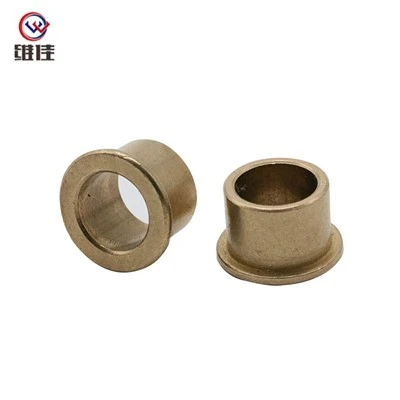
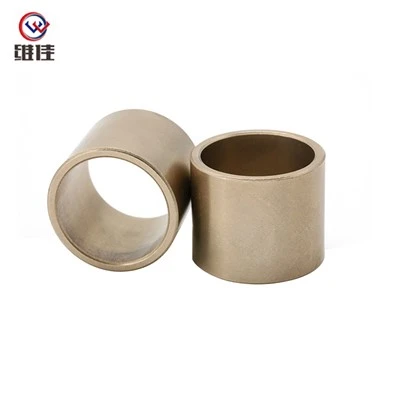
Bushing is a common mechanical component widely used in various mechanical systems, mainly used to reduce friction, transfer loads or isolate vibration. Bushings are usually made of metal, plastic or composite materials, with good wear resistance and lubrication properties, and can effectively reduce the friction coefficient between moving parts. In this way, bushings can not only improve mechanical efficiency, but also reduce energy loss and component wear.
In mechanical systems, the role of bushings is particularly important. They are often used to protect shaft parts, prevent direct contact and friction, thereby extending the service life of shafts and other related components. In addition, bushings can effectively reduce vibration and noise, improve the stability and comfort of the system, especially under high-speed operation or heavy load conditions, its role is more prominent. The use of bushings not only improves the reliability of the equipment, but also simplifies the maintenance process, reduces the frequency and cost of maintenance.
Therefore, as a simple but key component, bushings play an important role in the normal operation, performance optimization and extended equipment life of mechanical equipment.

Friction reduction and lubrication
By optimizing the material and structural design of the sliding contact surface, the bushing significantly reduces the friction loss between moving parts. Self-lubricating materials or external lubrication systems are used to form a stable lubricating film at the friction interface to reduce energy loss and wear. Typical applications include automotive gearbox gear shaft support, industrial pump valve stem guide and other scenarios. Especially under high-frequency motion or extreme working conditions, its friction reduction performance directly determines the life and efficiency of the equipment.
Vibration isolation and damping
The bushing effectively absorbs mechanical vibration energy and blocks the transmission path through the viscoelastic deformation of elastic materials or the interface friction of laminated structures. By adjusting the stiffness and damping characteristics, the resonant frequency can be avoided, and the system noise and fatigue damage can be reduced. For example, automobile suspension bushings relieve road impact, and wind turbine main shaft bushings block low-frequency vibrations. The core is to convert mechanical energy into heat energy dissipation and improve the smoothness of equipment operation.


Load transfer and alignment
The bushing ensures that the load is evenly distributed in the kinematic pair through geometric adaptation and high-rigidity material design to prevent local failure caused by stress concentration. The adaptive deformation of the flexible bushing can fit the contact surface, while the guide structure constrains the direction of movement and maintains the centering of the component. For example, the joint bushing of the excavator transmits the excavation impact force, and the guide bushing of the machine tool supports the precision slide saddle. The key function is to balance the load-bearing capacity and movement accuracy to ensure the reliability and repeatability of the mechanical system.
Sealing and anti-pollution
The bushing acts as a physical barrier for the mechanical interface, preventing external contaminants from invading the precision motion pair through contact seals, labyrinth structures or corrosion-resistant materials. For example, the axle bushing of agricultural machinery prevents mud from infiltrating, and the bushing of semiconductor equipment maintains vacuum cleanliness. Its design needs to take into account both sealing reliability and freedom of movement. The application of corrosion-resistant coatings and multi-layer sealing technology has further expanded the protection capabilities of bushings in harsh environments.

The performance of bushings is closely related to the materials and specific design characteristics selected. Common bushing materials mainly include metals, polymers and composite materials. Metal bushings such as brass and bronze are widely used in heavy-load and high-intensity working environments due to their excellent wear resistance and high load-bearing capacity. Polymer bushings, such as nylon and PTFE materials, have excellent self-lubricating properties and are suitable for applications requiring low friction and low maintenance. Composite bushings, such as carbon fiber reinforced plastics, not only have good mechanical strength, but also can effectively improve vibration reduction performance, suitable for areas with dual requirements for weight and performance.
When designing bushings, multiple key parameters must be precisely controlled. First, the tolerances of the inner and outer diameters determine the fit accuracy between the bushing and the shaft and housing, which directly affects the smoothness of operation and life. Secondly, surface roughness also has an important influence on friction characteristics and wear resistance. The coefficient of thermal expansion is a factor that needs to be considered in the design, especially in high-temperature applications, where the dimensional stability of the material is critical. In addition, chemical corrosion resistance is also an important design requirement, especially in bushing applications exposed to oil, acid, alkali or other corrosive environments. Reasonable material selection can greatly improve the reliability and durability of the system.
Bushings play a key role in many fields due to their excellent anti-friction, support and protection properties.
In industrial machinery, bushings are mainly used in machine tool spindles, pump and valve components and other parts to reduce friction, support the shaft and absorb impact loads. By selecting materials with strong wear resistance and precise dimensions, bushings can significantly extend the service life of equipment and improve the stability of system operation. They are particularly suitable for high-frequency and high-load operating environments.
In the field of automotive engineering, bushings are widely used in suspension systems and transmission systems, such as supporting universal joints or buffering suspension arm connections. Bushings can not only effectively reduce shock and noise, improve driving comfort and handling, but also protect key components from excessive wear and impact, greatly improving the overall performance and durability of the vehicle.


In electronic equipment and precision instruments, bushings are mainly used in electrical connectors and other parts as insulation and structural support elements. It can effectively isolate current and prevent short circuits, while maintaining the stability and safety of components in high-density and miniaturized designs. It is widely used in communication equipment, medical instruments and test and measurement fields.
The aerospace industry has extremely stringent requirements on the performance of bushings, which are often found in key parts such as engine components and flight control systems. Bushings must have excellent resistance to high temperatures, high pressures, and vibrations to ensure safe and stable operation of aircraft in extreme environments. They are usually made of high-strength alloys or advanced composite materials.
In the selection process of bushings, multiple key factors need to be considered comprehensively to ensure reliable performance and long life in practical applications. First, the load type needs to be determined to determine whether it is mainly radial load, axial load, or a combination of the two. Secondly, the movement frequency is also an important indicator. In high-frequency movement environments, materials with strong wear resistance and low friction coefficient should be preferred. The operating temperature range also needs special attention. Materials with good thermal stability should be selected in high-temperature environments to avoid performance degradation. In addition, lubrication conditions are one of the key factors determining the life of bushings. Self-lubricating or externally lubricated bushings should be selected based on whether there is a continuous lubrication environment.
Bushings may have multiple failure modes in long-term operation. Common causes include surface wear, material plastic deformation, and chemical corrosion. In order to avoid failures, a standardized maintenance plan must be formulated. The lubrication status of the bushing should be checked regularly to maintain a good oil film or lubrication layer to avoid early wear caused by dry friction. At the same time, it is necessary to monitor the change in the gap between the bushing and the mating parts. Once an abnormal increase occurs, it should be replaced in time to prevent the system accuracy from decreasing or components from being damaged. Through reasonable selection and standardized maintenance, the stability and service life of the mechanical system can be greatly improved.
Bushing technology will evolve towards intelligence, environmental protection, and high precision. Intelligent bushings achieve real-time status monitoring and predictive maintenance through integrated sensors and the Internet of Things; environmentally friendly materials such as degradable bio-based polymers and recyclable structures will reduce environmental burdens; multi-body dynamics simulation combined with AI algorithms will accelerate design optimization and improve performance prediction accuracy. In the future, bushings need to integrate multidisciplinary technologies such as mechanics, materials, and data science to cope with high dynamic conditions in the fields of new energy, robotics, etc., and gradually upgrade from passive components to self-sensing, adaptive, and sustainable intelligent modules, becoming the core support for industrial innovation.